3 Best Saucony Trail Running Shoes in 2026

We buy shoes ourselves. We earn commissions when you buy through us, at no extra cost. Why trust us
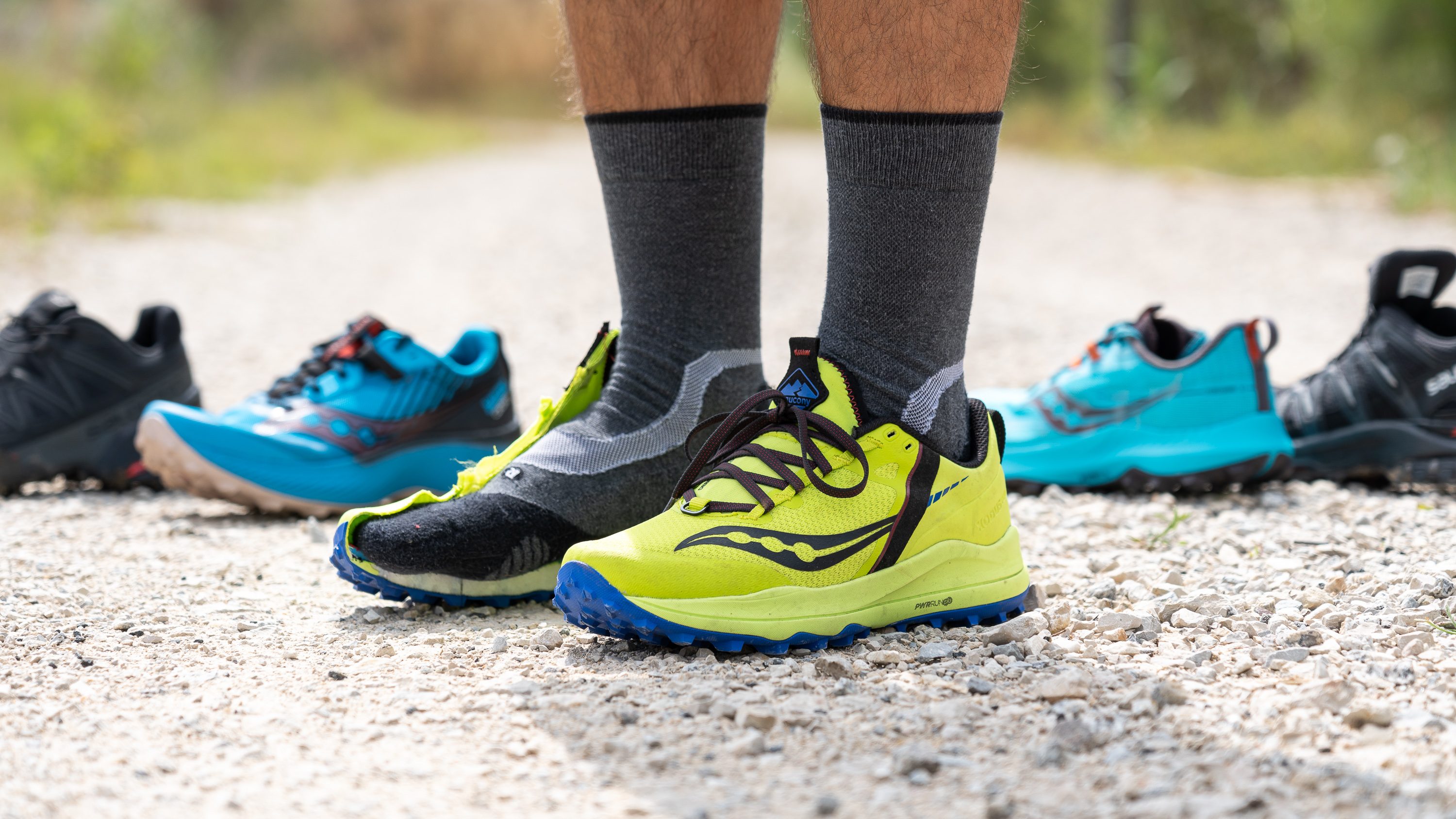
When thinking about Saucony trail running shoes, most runners immediately picture the Peregrine. And why wouldn’t they? It’s THE trail shoe for those who love muddy runs, aggressive bite, demanding single tracks, and who need a versatile trail runner that can cover various mixed terrain.
Saucony’s trail lineup does not stop there, though. We’re here to look at other choices, explain what they excel or fail at, and understand what makes Saucony trail running shoes stand out.
How we test Saucony trail running shoes
We love testing the shoes, and we do that on the trails and in the lab. How else would we be able to publish the most detailed and objective reviews out there?
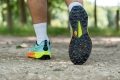
Once we lace up the shoes, we hit the trails. We need to know how the shoes perform in different environments, whether it’s road to trail, technical sections, hard-packed beginner trails, or deep mud and snow.
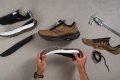
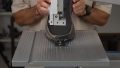
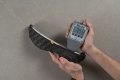
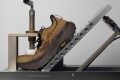
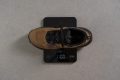
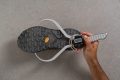
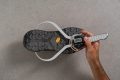
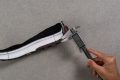
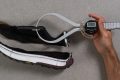
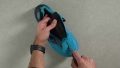
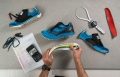
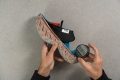
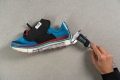
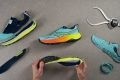
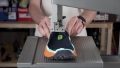
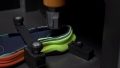
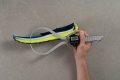
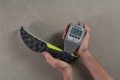
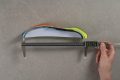
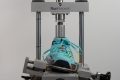
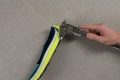
Then, we take the shoes to the lab, where we perform various lab tests. First, on the whole shoes. Then, we use a band saw to cut the shoes in half, lengthwise. Then, we cut the upper to expose the platform. All of these stages are needed because the machines and the tools that we use need clear access to different shoe parts, like the midsole (for stack heights, heel drop, lug depth), midsole foam for midsole softness measurements, the whole platform for shock absorption and energy return tests, and so on.
Given that we’re talking about trail shoes here, we naturally highlight the traction and the durability of the outsole.
Once done with the lab tests, we summarise all of our findings and publish them on our website. Here, we put a select few under the spotlight because they managed to outperform the rest.
Best Saucony trail running shoes overall







What makes it the best?
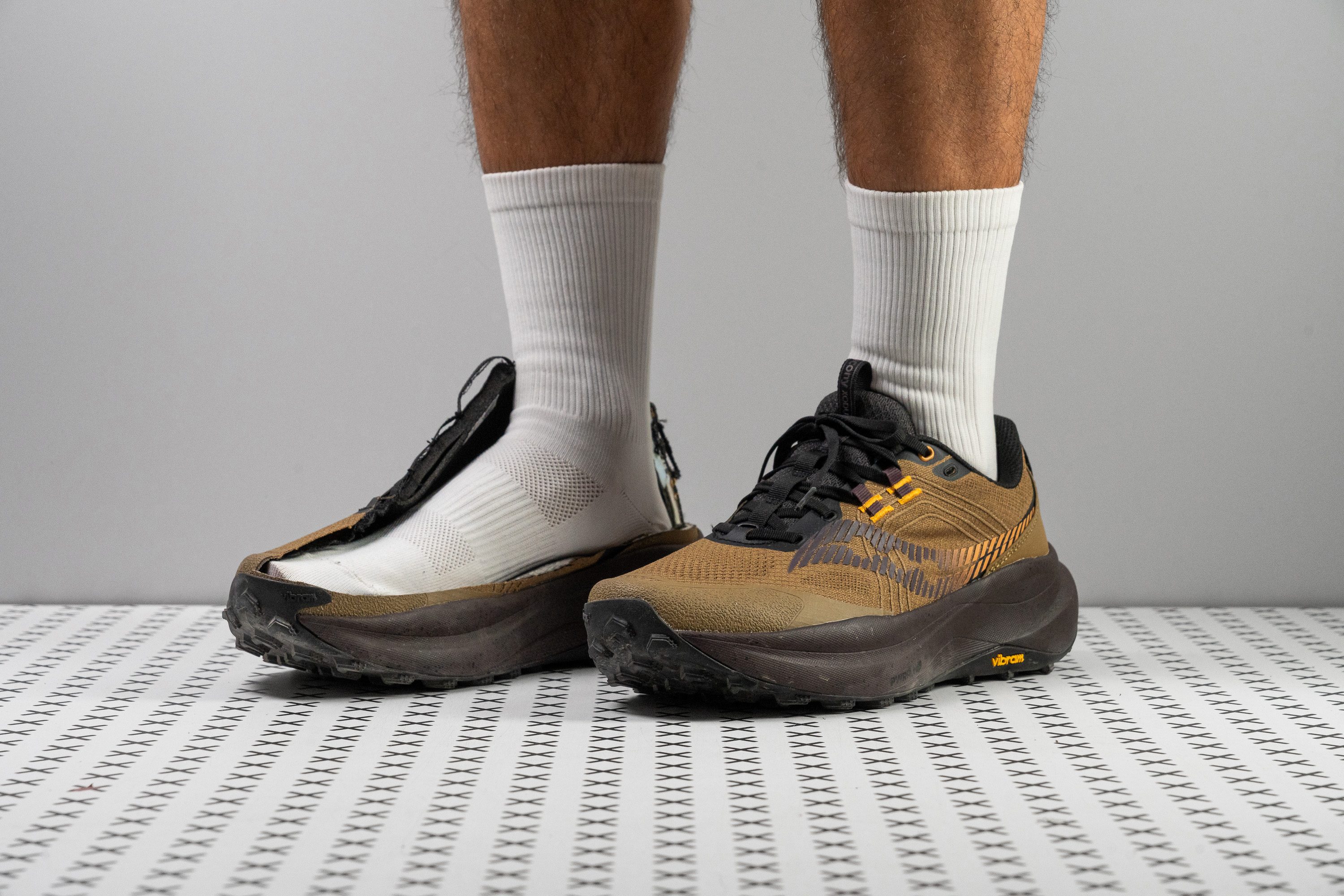
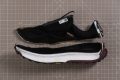
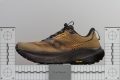
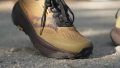
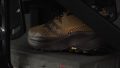
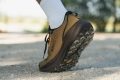
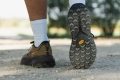
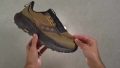
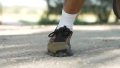
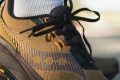
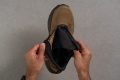
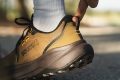
In our off-road adventures with Saucony’s trail line-up, we discovered that Xodus Ultra 4 offers the best overall experience. It made brutal miles feel like a walk in the park. No arguing between trail and feet, it has a ground-muting cushion with an added energy boost. Plus, it features a wide base with the reliable Vibram Megagrip rubber underneath for enhanced control and steady footing.
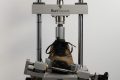
The midsole stands above average at 37.6/31.1 mm, perfect for endurance runs. The bulk of the midsole consists of a plush and propulsive PWRRUN PB foam. Testing for shock absorption, both the heel and forefoot offer better impact protection than average, both scoring 127 SA. In terms of energy return, it continues to impress with a massive rebound of 64.9% in the heel and 72.4% in the forefoot!
To counter the shoe’s height, it widens its midsole to 116.7/97.3 mm for sure-footed strides. Additionally, the Vibram Megagrip rubber delivers solid traction across various terrain conditions, proven by its 0.72 score in our wet-condition test. At this level, its grip is 20.0% stronger than average.
We highly encourage wearing reflective elements when running in the dark because XU4 has none.
Pros
- Amazing bounce from PWRRUN PB foam
- First Xodus Ultra with a Vibram outsole
- Stable platform underfoot
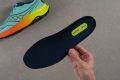
- Premium PWRRUN+ insole
- Works well for hiking too
- Full-length outsole coverage
- Excellent for ultras
- Fantastic traction on easy terrain
Cons
- Weight is becoming a real problem
- Tapered toebox fit
- Small price increase
- Weak heel padding durability
Best Saucony trail running shoes for race




What makes it the best?
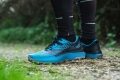
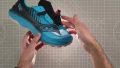
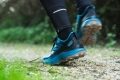
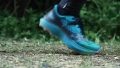
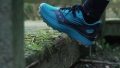
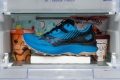
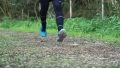
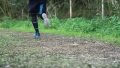
Saucony Endorphin Edge is always race-ready with its fast and light nature, delightful cushion, and secured ride. It gives the speed and confidence every runner needs, making it our ultimate trail racer among Saucony shoes.
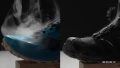
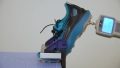
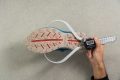
This off-road racer doesn’t drag us down with its feathery 9.5 oz (269g). It’s as light as the average road running shoe and has the benefits of a trail shoe. It’s hard to slow down with this pair because of its snappy carbon plate and rocker structure. Our flex test in the lab confirms the pop of energy we experience, as it’s 76.9% more resilient than average. Every step down launches back with greater energy return.
Endorphin Edge excels in any race distance with its pillow-like cushion that prevents our feet from strain. Our durometer validates that its velvet foam is 27.7% softer than the average trail shoe.
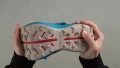
The outsole can withstand any terrain with its 3.4-mm lugs that bite through puddles and loose dirt. We can easily manoeuvre without any slips because of its grip and without any lateral wobbles because of its wide enough base.
The heel fit may feel loose to some runners, causing heel slippage. We recommend checking other options for a more snug fit in this area.
Pros
- Fast as hell
- Comfort written all over it
- Super smooth ride
- Light AF
- Protection can't be more awesome
- Breathable under warm temps
- Toe box is ready for ultras
- Carbon plate is not harsh
- Grippy on wet, loose, and soft trails
- Also great for the roads
Cons
- Unstable at slow paces
- Loose heel
Best lightweight Saucony trail running shoes





What makes it the best?
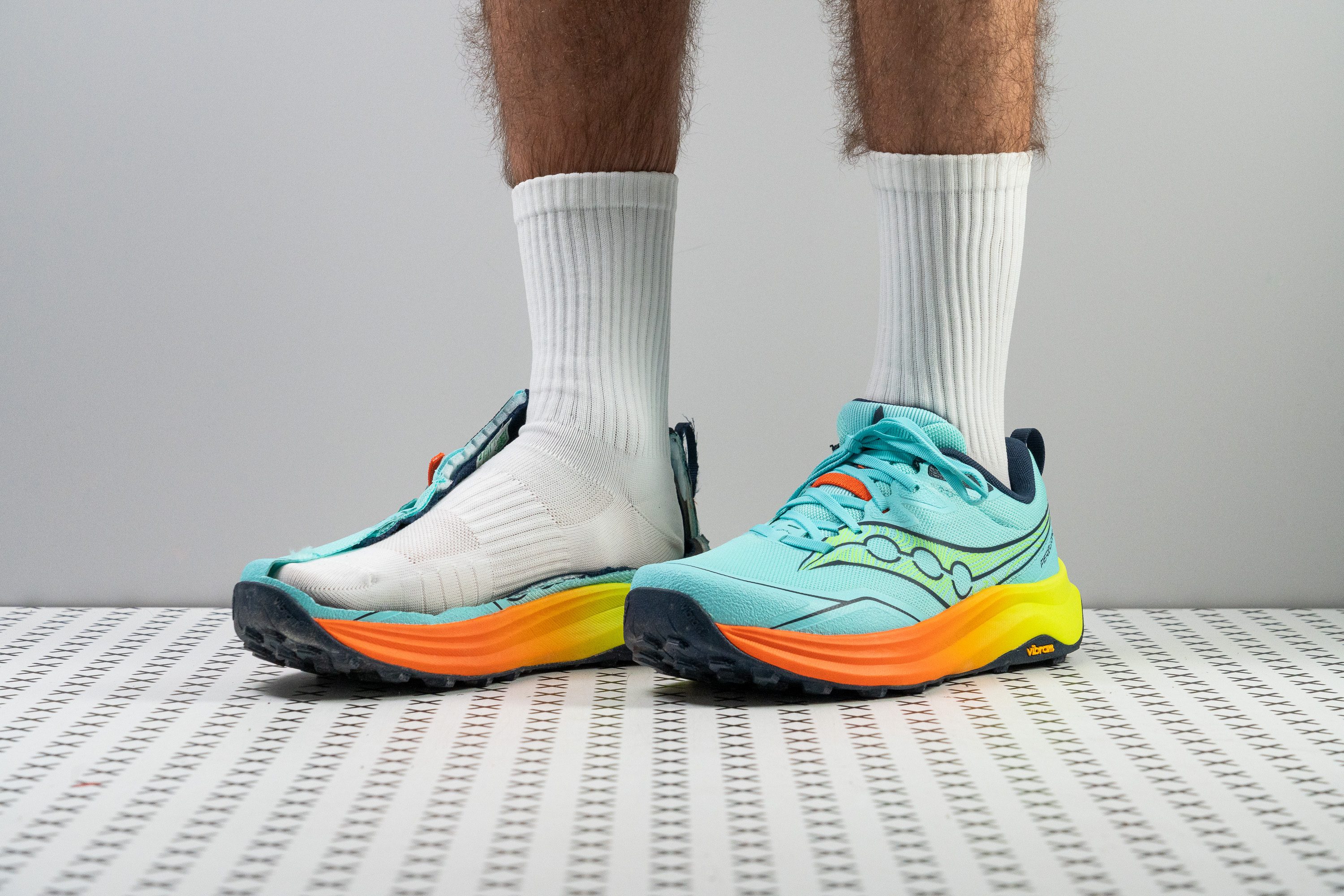
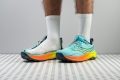
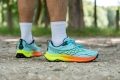
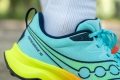
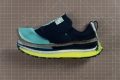
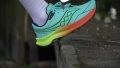
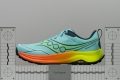
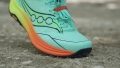
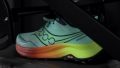
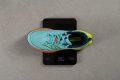
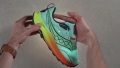
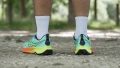
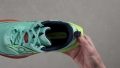
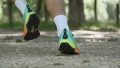
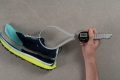
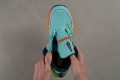
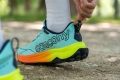
We navigated trail routes with finesse and confidence in the Peregrine 16. Its light build and low drop allow us to adapt to any environment quickly, while its versatile lugs deliver unwavering traction in the woods. Though backed up by lab analysis, it’s our own experience that cements Peregrine 16’s status as the best lightweight Saucony trail running shoe.
Peregrine 16 feels easy on foot, almost like we can glide through the trails. At 9.8 oz (278g), it’s lighter than the average trail shoe (10.1 oz/286g).
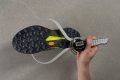
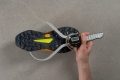
Its grounded yet responsive nature enhances a nimble sensation as well, reaching an impressive 64.5% in the forefoot in our energy return test. Our calliper reveals a well-balanced stack height of 31.7/26.9 mm, resulting in a minimal 4.8 mm drop. This figure is lower than the 7.4 mm average, promoting midfoot to forefoot landings.
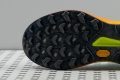
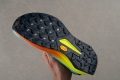
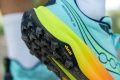
Its Vibram Megagrip encourages us to challenge ourselves with various terrains, especially with its strong result of 0.72 in our traction test. With 3.5 mm Traction Lugs, we can handle mixed surfaces effortlessly without feeling blocky on hard pavements. We feel secure knowing the reliable outsole would protect us from any slips.
However, its toe box features a strong taper, which may cause unwanted pressure during long runs or for those with broad feet. If this is a dealbreaker, it would be best to explore more accommodating shoes.
Pros
- Vibram Megagrip is in da house
- Stable ride
- Secure, confidence-inspiring fit
- Dependable workhorse for trail training
- Better than before on gravel roads
- Can handle hiking with ease
- Premium PWRRUN+ insole
- Comfortable foam
- Modern look
- Reasonable price
Cons
- Slight weight gain
- Tapered toebox
- Low drop limits appeal for some
Saucony trail running shoes: overview
Saucony shoes are known for their grip and durability, and it’s in our lab that we double-check these claims. We also take other features into account and rank the shoes.

Endorphin Trail, Endorphin Edge, and Endorphin Rift are things of the past. Currently, Saucony offers 4 trail running shoe lines. Let’s have a look at them.
Saucony Peregrine trail shoes
Peregrine, by far the most popular. Equipped with rock plates and deep lugs, these are great for mixed terrain. However, the 16th iteration (newest one at the moment of writing this guide) got significantly shallower lugs than its predecessors.
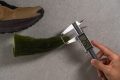
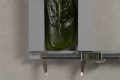
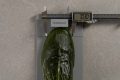
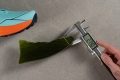
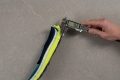
In the lab, we use a calliper to measure the depth of the lugs on shoes cut in half.

| Model | Lug depth [mm] |
|
Saucony Peregrine 16 |
3.5 |
|
Saucony Peregrine 15 |
4.7 |
|
Saucony Peregrine 14 |
4.7 |
|
Saucony Peregrine 13 |
4.8 |
|
Saucony Peregrine 12 |
4.6 |
We hope this is not a trend because the Peregrine is known as a great mud and even OCR/Spartan shoe. With 3.5 mm lugs, we doubt it will keep that throne. If they get even shallower, it will be Peregrine no more.

The newest Peregrine is the tallest, and we also hope that’s not a trend. Great mud and Spartan shoes need to stay agile and lower to the ground.
|
Model |
Heel stack [mm] |
Forefoot stack [mm] |
|
Saucony Peregrine 16 |
31.7 |
26.9 |
|
Saucony Peregrine 15 |
29.5 |
25.8 |
|
Saucony Peregrine 14 |
27.3 |
25.1 |
|
Saucony Peregrine 13 |
27.5 |
23.6 |
|
Saucony Peregrine 12 |
30.2 |
23.2 |
Saucony Xodus Ultra trail shoes
With “Ultra” already in the shoe name, the purpose is pretty self-explanatory. If the name alone doesn't convince you, we discovered that these shoes are great for longer distances thanks to the premium foam (PWRRUN PB). For ultras, premium foams are a better choice than standard foams because they offer better shock absorption and energy return, which reduces or delays foot and leg fatigue.

While the Xodus Ultra 4 does not have rock plates, it relies on this thick foam mix when it comes to underfoot protection.

Just like the Peregrines, Xodus Ultras have lost some bite. From Xodus Ultra 3 to Xodus Ultra 4, lug depth got 0.8 mm shallower. Let’s hope this isn’t a trend, because when it comes to versatility, especially mixed with technical terrain and mud, we’d love to see thicker lugs.

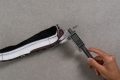
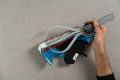
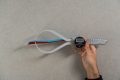
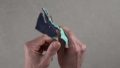
Rock plates are visible once the shoes are cut in half (which is exactly what we do in the lab). In the case shown above, it's sandwiched between the outsole and the midsole, only under the forefoot. The outsole has cutouts that let you see the plate (in case you don't want to cut the shoe in half :) ).
Ride TR shoes
In road running, the Ride may be the most well-known shoe from Saucony. 19 iterations (so far) confirm how good and needed the shoe is. Because of that, it made sense to keep the familiar feeling and make it available for trail running too.
Guide TR shoes
Ride’s stability counterpart, the Guide. Same story: if you love Guide on the roads, Guide TR may be great on trails. Extra stability and support in a trail package.
Grip in Saucony trail running shoes
If you’re a beginner runner, you may think “Oh, it’s Vibram, great!” and move on. Heck, even if you’re an experienced runner, you may think so! However, when talking about grip, here at RunRepeat, we also look at:
- Lug depth, which we measure using a digital calliper (this test is done on a shoe cut in half),
- Traction, which we measure in the lab,
- Outsole durability, which we also measure, and it matters because very sticky rubber tends to be soft and, therefore, less durable,
- Tread pattern, which essentially tells us what the outsole is good for.
When it comes to lug depth and tread patterns, there are 2 contrasting options. The first one is shallower lugs that are rather wide, flat, and placed close to each other. These lugs are usually great for easy terrain like gravel or large flat rocks. The second one is very deep, aggressive lugs that are placed further apart from each other. These are great for mud and snow.

The middle ground varies. We have very versatile trail running shoes with different lug shapes and orientations, or with thin slits that channel the water away. Saucony, with their Peregrine and Xodus Ultra lines, is more into versatility and aggressiveness for soft ground.
The traction test tells us how Saucony trail shoes perform on wet surfaces. We follow the SATRA TM144 methodology when doing this test, and the result is a dynamic coefficient of friction. The higher it is, the better! Especially when higher than 0.45, meaning the shoes will excel on both dry and wet surfaces.
Given that this test is done on wet concrete, the result is not transferable to other surfaces, which is why we take other things into account (tread pattern, lug depth, rubber type).
Last but not least, we have to talk about the durability of the outsole. Say you have 3-mm-thick lugs on your trail shoes. Prematurely losing 2 mm due to daily wear and tear is significantly worse (you’re basically left with almost-flat outsoles) than losing only 0.1 mm.

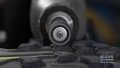
We measure the depth of the dent that the Dremel made and the conclusion is straightforward: the shallower the dent, the more durable the outsole.

How durable are Saucony trail running shoes?
We already covered the durability of the outsole in the section above. In the lab, we also test the durability of the toebox and the durability of the heel padding.
The process is the same: we use a Dremel, press it against the surface, apply the same pressure, use the same time duration, and look at the damage. We assess the damage on a 1-5 scale, where higher numbers mean better durability.
If you often cover technical terrain or patches covered with sharp debris, you should look at the toebox durability. Heel padding, on the other hand, is often a worry for runners with Haglund’s deformity (as they need a cushioned heel that lasts).
Finding stable Saucony trail running shoes
Given how demanding and uneven the terrain can get, you may want more stable shoes to keep you planted. This means that we need to look at a) the platform width, b) heel stiffness counter, c) torsional rigidity.

In the lab, we use a digital calliper to measure the width of the midsole at the forefoot and at the heel. Naturally, the wider the platform, the more stable it is. This is especially important if you like high-stacked trail shoes, because when they are high and narrow, they become unstable.
When it comes to locking the heel in place and, therefore, creating a more stable overall feel, we turn to the heel counter and assess its stiffness. 5/5 stands for very stiff and 1/5 very flexible.

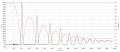
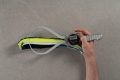
Often overlooked: torsional rigidity. This test tells us basically how difficult it is to twist the shoe, except we don’t do it with our hands but with a specialised machine. Torsional rigidity comes to light when hiking over technical terrain, like roots and sharp rocks. Basically, the part of the shoe in contact with the ground is small (think the edge of a rock or a small root surface). When you land on something like that, the rest of the foot wants to overhang, and a torsionally rigid shoe prevents that. By doing so, it also makes your feet less tired.
Most comfortable Saucony trail running shoes
When runners discuss comfort, different things pop up, but midsole softness is almost always #1. We wouldn’t be here if we weren’t ready to talk about more than midsole softness, so let’s dig in.

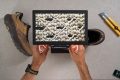
The higher the number on the durometer’s display, the firmer the foam. However, a shoe being cloud-like or not-like-a-brick at first is only telling us how it feels at first. Upon stepping in. What happens later, though? For that, we look at shock absorption.
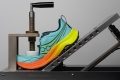
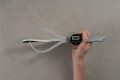
We perform the test on a shoe that has had its upper removed, because the machine has to access the forefoot and the heel freely (just like your feet do when landing on them). This test tells us how good the midsole is at absorbing impact forces (shock absorption) and how lively the ride is (energy return). In race shoes, we’d want both of these to be high. In daily trainers, it’s expected for them to be moderate. Heavier runners or those running longer distances should look for high shock absorption for sure.

If this wasn’t enough to convince you, and if you actually prefer having more materials hugging your feet to make them comfy, we also measure the thickness of the tongue, and we note down whether the tongue is gusseted. A tongue sliding to the side can significantly reduce the overall comfort (we know).

Similar buying guides