3 Best Reebok Running Shoes in 2026


We buy shoes ourselves. We earn commissions when you buy through us, at no extra cost. Why trust us
We really don’t know what’s up with Reebok running shoes. We can’t say they are at the top of the game, or even close. Reebok has had some quiet years, and the market has changed a lot. We’d surely be telling a different story if we were covering workout shoes.
In the running world, though, we will navigate our lab tests and our experience with some Reebok running shoes. There aren’t many, unfortunately.


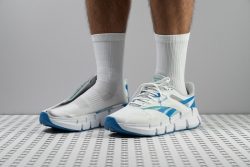
How we test Reebok running shoes
We purchase Reebok running shoes with our own money to keep our reviews bias-free and transparent. Then, we follow these steps:
- We run multiple times in each pair to do some wear testing.
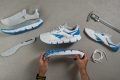
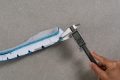
- To understand the anatomy of the shoes, we dig deep into the technologies used and perform lab tests; we cut Reebok running shoes in half and then into pieces.
- With our durometers, calipers, and other tools and specialized machines, we measure the shoe's breathability, flexibility, shock absorption, outsole hardness, stack heights, and other features runners care about.
Best Reebok running shoes overall



What makes it the best?
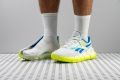
Our runs with the Reebok FloatZig 1 were well-balanced, giving us a good mix of comfort and control. It’s a versatile trainer that also delivers secured strides, allowing us to run mindlessly. Our lab assessments validate its generous cushioning, stable base, and loose build, which make it our best Reebok running shoe.
The midsole offers excellent impact protection because we had so much foam beneath us, confirmed by our caliper with a stack height of 36.8/29.8 mm. The Floatride Energy foam felt balanced with a touch of responsiveness. Beyond style, the “Zig” design of the midsole helps the platform feel softer through its compression.
Our surefootedness stems from the wide base, notably the 103.6 mm heel, 12.8 mm above average! This is one of the widest we’ve ever measured and helps stabilize our landings without adding stiffness to the shoe.
We could move naturally and freely since we didn’t have to fight the shoe’s resistance. Our bend test confirms it’s 32.6% more flexible than average, boosting both comfort and versatility.
The outsole delivers impressive grip during testing but wreaked havoc in our Dremel test. Those who prefer a more long-lasting trainer should try alternatives.
Pros
- Unique retro-inspired design
- All-around reflectivity
- Higher stack than other daily trainers
- Doubles as a sneaker
- Durable TPE midsole
- Wide and stable heel
- Suitable for long runs
- Fairly priced
- Ortholite footbed
Cons
- Snug midfoot and tapered toebox
- On the heavier side
- Outsole durability
- Firm feel
Best budget Reebok running shoes


What makes it the best?
The Lite 3 is our clear top choice for a budget shoe in the Reebok line. It combines immense comfort, surprising springiness and stability in a nice lightweight package while having a staggeringly low price.
At just $65, the Lite 3 sits very firmly on the lower end of the Reebok line, where the average shoe costs close to $100. But for a budget shoe, it still brings a whole lot to the table.
The Lite 3 lives up to its name by being really lightweight. It's a mere 8.75 oz (248g), which is 0.81 oz (23g) lighter than the average road running shoe. But the shoe has a surprising amount of spring and bounce that makes it an exciting and enjoyable ride.
Not only that, but its midsole has more than enough cushioning. Its 32.7 mm heel stack, which is right at the average for road running shoes, did a fantastic job of absorbing impact on our runs.
But the biggest trick this budget running shoe has up its sleeve is its shockingly good arch support. In part because of its wide base in the forefoot—we measured it at 117.7 mm, 5.9 wider than average—it provides the underfoot support that helps people with foot problems.
However, this budget shoe's big downside is its outsole durability. The outsole, which we measured to be 5.4% softer than average, already showed significant signs of wear after just a couple of months.
Pros
- Comfortable all day
- A fun, peppy ride
- Supportive underfoot
- Affordable
- Welcomes wide feet
- Grippy on roads & light trails
- Great for the gym and walking
Cons
- Laces are short
- Poor outsole durability
- Not for hot days
Reebok running shoes with the best style



What makes it the best?
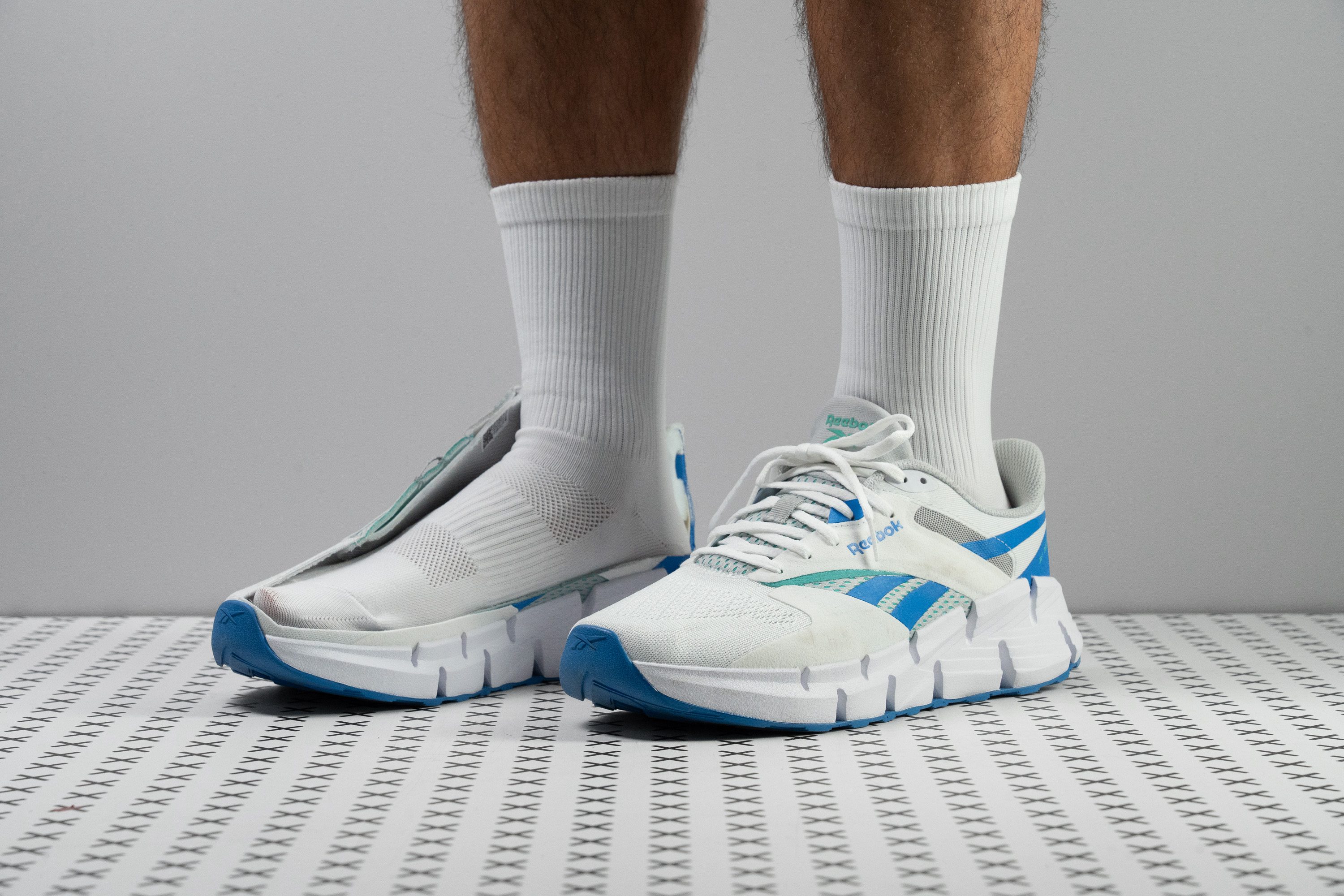
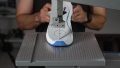
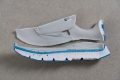
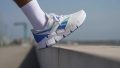
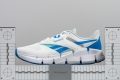
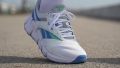
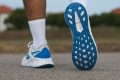
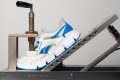
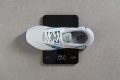
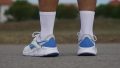
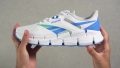
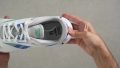
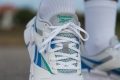
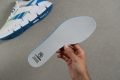
Among Reebok running shoes we tested inside the lab and outside in real-world settings, Zig Dynamica 5 caught our eye with the best style. It blends an eye-catching midsole with a stable ride at a really good price point. For only $90, it offers all-weather-ready traction too, making every cent worth it.
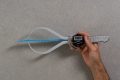
The unique midsole boosts our confidence, not only with its unusual design but also with our surefootedness. It features a well-balanced 34.1/27.8 mm stack, offering ground feel without feeling too harsh on the foot.
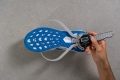
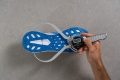
Zig 5 adds width to its heel to further stabilize our landings. Our caliper reveals it’s 96.7 mm, 6.0 mm wider than average.
Zig 5 highlights value for money by delivering a dependable grip. Scoring 0.55 in our traction test, it emerged 10.0% grippier than average, explaining our controlled strides even when it rains.
However, stylish as it is, the midsole falls short in energy return. Runners in more serious training will want more responsiveness.
Pros
- Eye-catching retro design
- Durable outsole
- Stable platform for heel strikers
- Budget-friendly price
- Solid traction even on wet surfaces
- Semi-gusseted tongue
- Works well as a casual sneaker
Cons
- Tapered, low-height toebox
- Lacks any speed
- Upper material is weak
- Feels heavy underfoot
What’s up with Reebok?
We don’t know. They’ve been quiet for quite some time, and during that period other brands have flooded the running shoe market. Reebok did make noise in other sports (Crossfit especially), but in running… we will have to wait and see. Until then, we will keep wondering whether Reebok can make it as a running shoe brand.

It’s not even about not offering super trainers or super shoes (although it is a bit about that given the year we live in and what the competition is doing), but also not being very good at delivering… something. Whether it’s a budget daily trainer or a stability shoe.
Cushioning and comfort in Reebok running shoes
When you put a shoe on, softness usually wins you over (or not). Runners, especially beginners, often associate that with comfort.

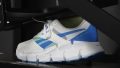
And this is not where we should stop talking about comfort. Advanced runners already know: we have to look at the shock absorption, the midsole’s ability to dampen the impact at every landing. As miles accumulate, so does the fatigue, and what better to help than a good midsole with its leg-saving features (shock absorption and energy return).
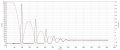
This test measures the shock absorption and energy return at the same time. We highlight energy return in race shoes and tempo shoes, which does not mean it’s completely irrelevant when it comes to testing daily trainers. It does mean that, in daily trainers, it’s expected for energy return to be somewhat lower (moderate, not high), because daily trainers are more durable and stable, and they usually use standard, not premium foams.
Durability of Reebok running shoes
We all prioritize different parts of a shoe when it comes to durability. Some runners end up with a hole in the toebox because their big toe points up, while others have padding behind the heel wear out prematurely. Or the outsole disappears too soon on the inner side of the shoe because of excessive overpronation.
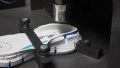
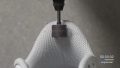
That’s why we test all 3 areas in our durability tests. We use a Dremel for this testing, and the tests are standardized (like any other in our lab), meaning we always use the same pressure, RPMs (rotations per minute), and time duration.
When it comes to the durability of the toebox and heel padding, we can not use a tool to precisely measure the damage, so we assign a 1-5 score, where 5/5 is the most durable and 1/5 the least.
Outsoles are made of harder materials, usually rubber (with sections of exposed midsole), so we use a tire tread gauge to measure the depth of the dent. The deeper the dent, the less durable the outsole.

Outsole durability also depends on outsole thickness, since more material (thicker rubber) means more durability. The sooner you expose the midsole, the worse.
Traction in Reebok running shoes
The outsole may be very durable, but what’s the point if it’s gonna make you slip and slide the moment you hit wet surfaces? That’s why we perform a traction test in the lab.
This test allows us to measure the dynamic coefficient of friction, and the higher it is, the better. Specifically, we’re interested in it being higher than 0.45, as that would mean that the outsole is good for both dry and wet surfaces.

Finding Reebok shoes that fit well
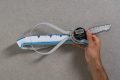
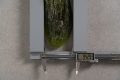
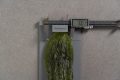
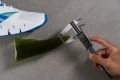
First things first, nail the sizing. If you’re not sure, consult our Reebok size chart. Then nail the width. To help you with this, we pour our green liquid into the shoes, freeze them together, and after 2 hours, pull a gel cast out of the shoe.
This gel cast perfectly represents the shoe interiors, so we can start measuring. We perform the measurements in 3 places.


Given that we’ve taken the measurements basically on the inside, they tell us how roomy the shoe actually is. This differs significantly from measuring the shoe’s width on the outside with a caliper, which accounts for varying upper thickness, overlays, protective details, and so on.
Similar buying guides