













Our verdict
- Urban 78
- Speed 90
- Day hiking 88
- Backpacking 52
Pros
- Excellent shock absorption
- One of the lightest hiking shoes
- Protective TPU shank
- Great traction on flat rock (dry and wet)
- Perfect grip for mixed terrain
- Wide and stable platform
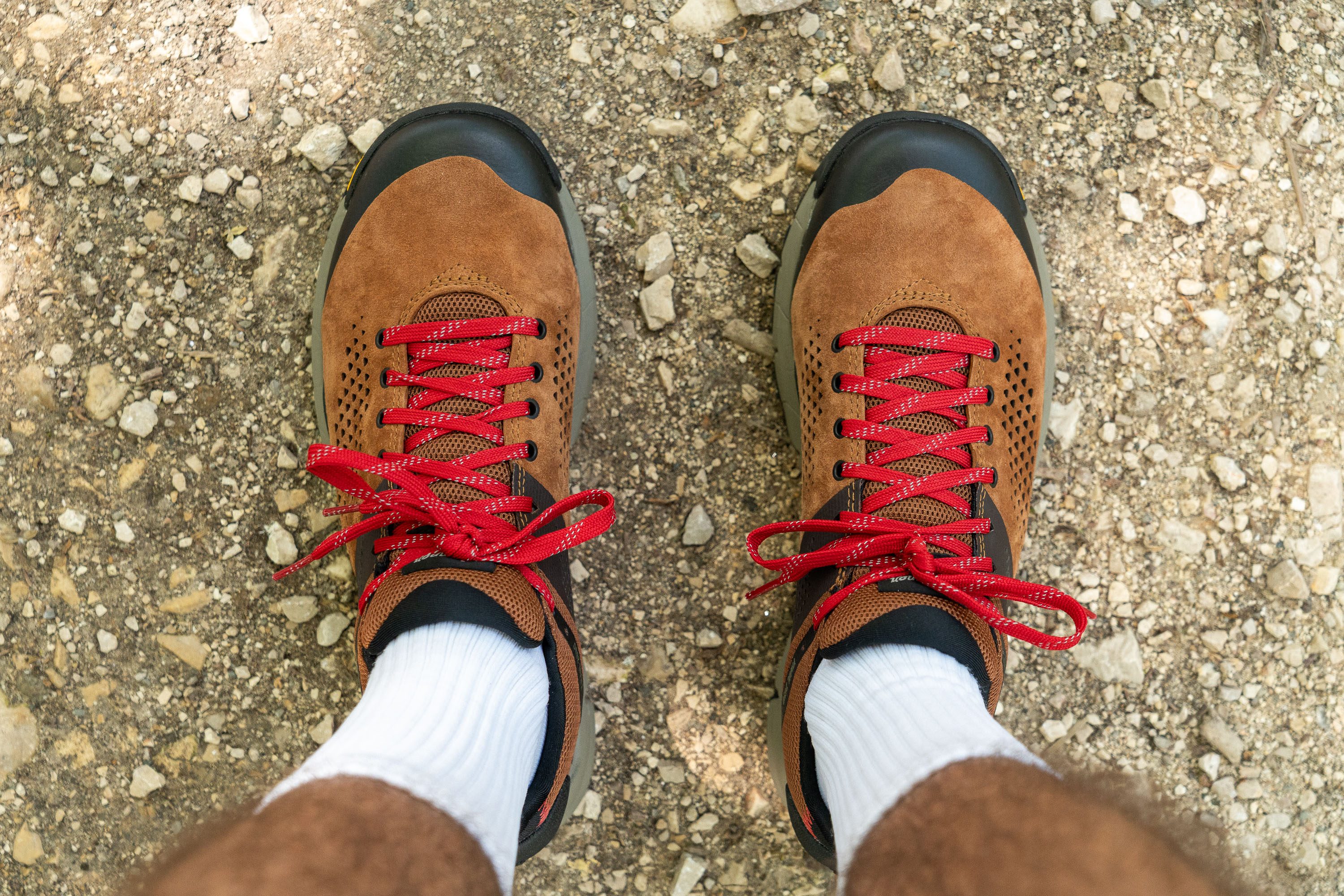
- Durable suede upper
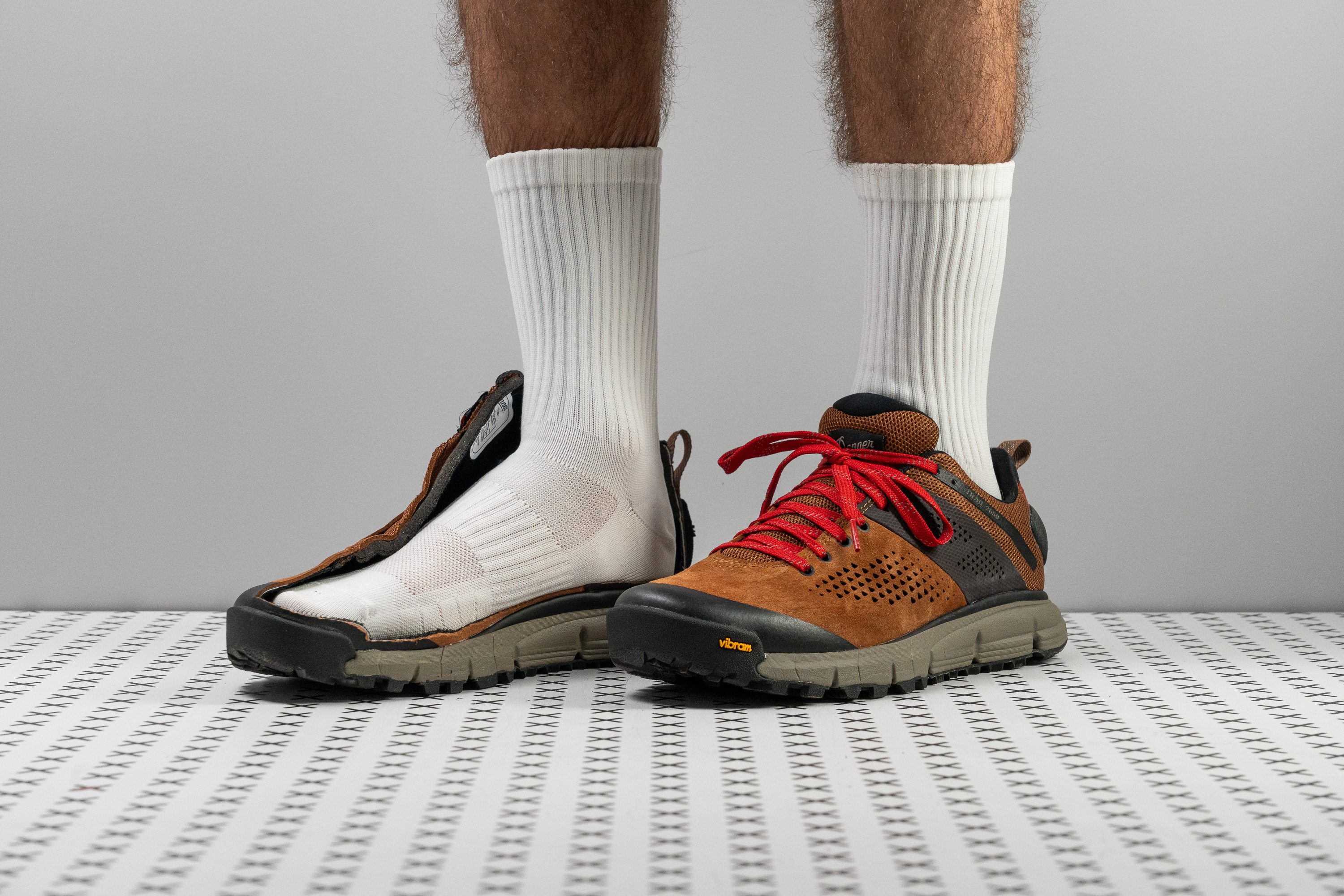
- Comfortable step-in feel
Cons
- Narrow fit and toebox
- Little support for technical hikes
- Lacks value for money
Awards
- Top 27% in lightweight hiking shoes
- Top 22% most popular hiking shoes
Comparison
The most similar hiking shoes compared
+ + Add a shoe | |||||
|---|---|---|---|---|---|
| Our score | 85 Great | 73 Good | 82 Good | 91 Superb | |
| Price | £150 | £160 | £80 | £125 | |
| Trail terrain | Light terrainVersatile / Moderate terrain | Light terrainVersatile / Moderate terrain | Light terrainVersatile / Moderate terrain | Light terrainVersatile / Moderate terrain | |
| Shock absorption | High | Low | Moderate | High | |
| Energy return heel | Low | Moderate | Moderate | Low | |
| Traction | Moderate | Moderate | Moderate | - | |
| Weight lab Weight brand | 11 oz / 312g 12 oz / 340g | 16.2 oz / 458g 14 oz / 397g | 11.9 oz / 337g | 11.6 oz / 329g 12.3 oz / 350g | |
| Lightweight | ✓ | ✗ | ✓ | ✓ | |
| Breathability | Warm | Warm | Warm | Breathable | |
| Use | Day HikingSpeed Hiking | Day Hiking | Day HikingUrban hikingBeginners | Day HikingSpeed Hiking | |
| Orthotic friendly | ✓ | ✓ | ✓ | ✓ | |
| Drop lab | 14.3 mm | 12.1 mm | 13.3 mm | 15.0 mm | |
| Size | True to size | - | - | Slightly small | |
| Midsole softness | Firm | Balanced | Balanced | Soft | |
| Difference in midsole softness in cold | Normal | Normal | Big | Normal | |
| Torsional rigidity | Moderate | Stiff | Stiff | Stiff | |
| Heel counter stiffness | Flexible | Stiff | Flexible | Flexible | |
| Stiffness | Flexible | Stiff | Stiff | Moderate | |
| Outsole hardness | - | - | - | Average | |
| Material | Leather | Leather | Suede | Mesh | |
| Season | Winter | Winter | Winter | SummerAll seasons | |
| Toebox durability | Good | Good | Good | Very good | |
| Heel padding durability | Decent | Bad | Decent | Bad | |
| Outsole durability | Good | Decent | Good | Good | |
| Width / fit | Narrow | Medium | Medium | Medium | |
| Toebox width | Narrow | Medium | Medium | Wide | |
| Lug depth | 3.8 mm | 3.7 mm | 4.4 mm | 3.7 mm | |
| Heel stack lab | 33.3 mm | 38.6 mm | 36.4 mm | 38.8 mm | |
| Forefoot | 19.0 mm | 26.5 mm | 23.1 mm | 23.8 mm | |
| Widths available | NormalWide | Normal | Normal | NormalWide | |
| Technology | OrtholiteVibram | - | - | - | |
| Heel tab | Finger loop | None | Finger loop | Finger loop | |
| Removable insole | ✓ | ✓ | ✓ | ✓ | |
| Ranking | #17 Top 37% | #42 Bottom 8% | #24 Bottom 47% | #1 Top 3% | |
| Popularity | #10 Top 22% | #44 Bottom 4% | #18 Top 40% | #7 Top 16% |

Who should buy
The Danner Trail 2650 has a unique mix of features that sets it apart from many other hiking shoes on the market. You are likely to appreciate it if you could use the following:
- a comfortable shoe for moderate mixed terrain
- a sturdy and durable leather shoe that weighs less than average
- a shoe with high shock absorption for long trail mileage
Who should NOT buy
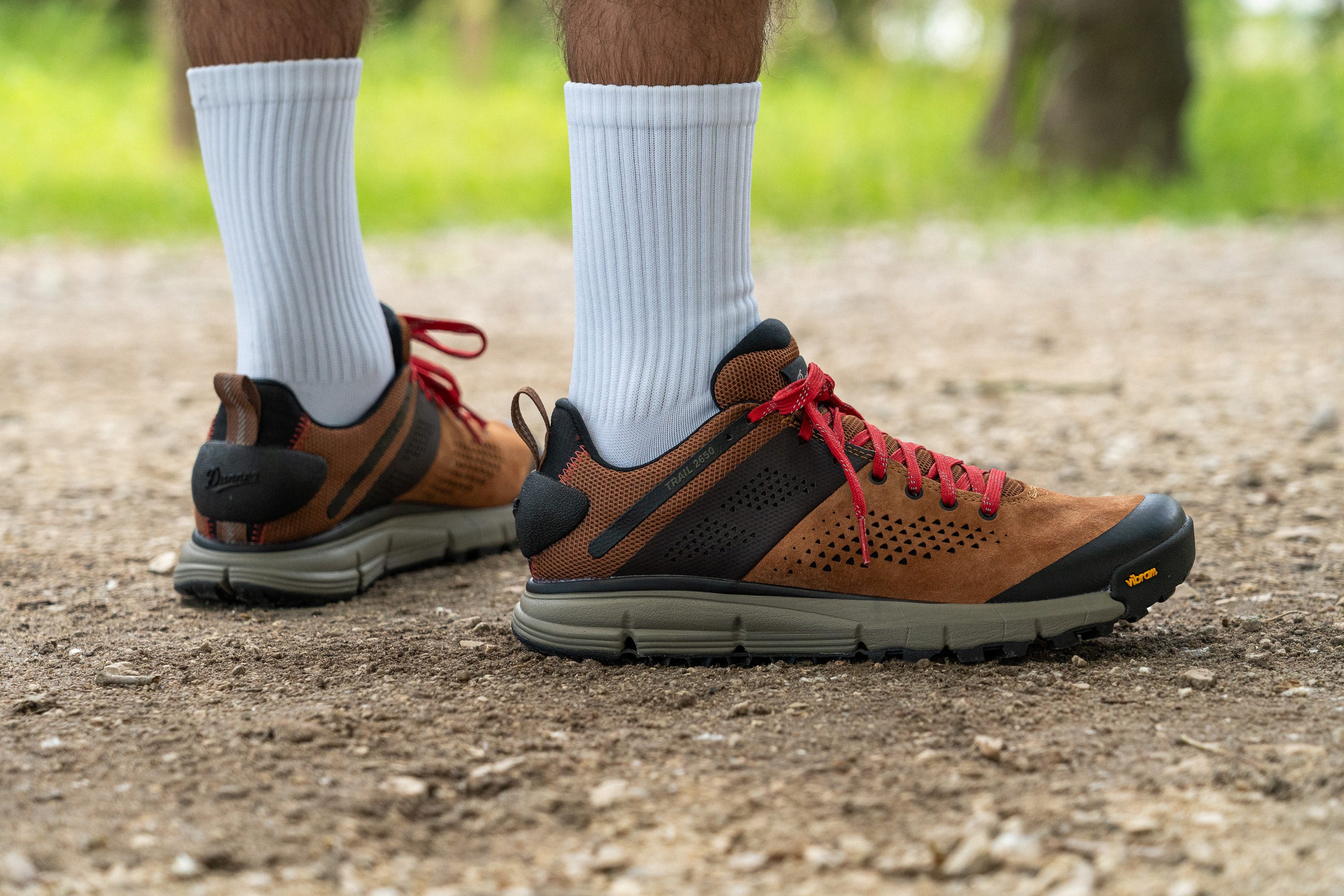
As one of the most expensive hiking shoe options in our catalogue, the Danner Trail 2650 can be pretty heavy on one's wallet. If you can do without a leather upper in favour of a less expensive but equally lightweight and well-cushioned option for mixed terrain, the Merrell Moab Speed 2 is an excellent alternative.
We also found that the Trail 2650 lacks the support and rigidity needed to handle rocky, obstacle-laden technical routes. And if that's on your menu, try the Danner N45 or the La Sportiva Ultra Raptor II instead.
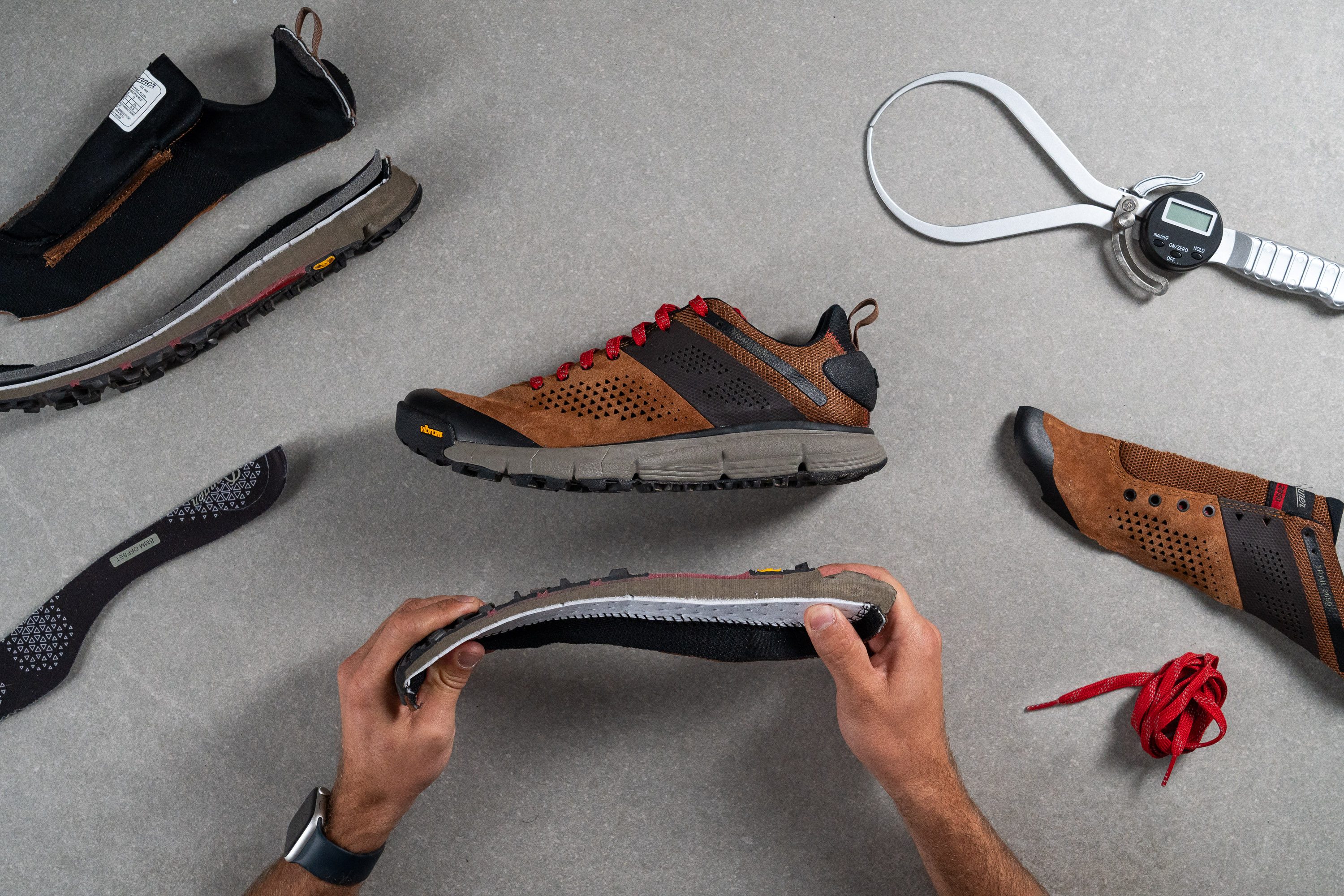
Cushioning
Shock absorption
The Danner Trail 2650's comfort-oriented design becomes increasingly apparent as the hike progresses.
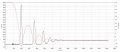
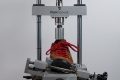
With an above-average shock absorption of 124 SA in the heel, its lightweight EVA midsole offers great impact protection for serious daily mileage.
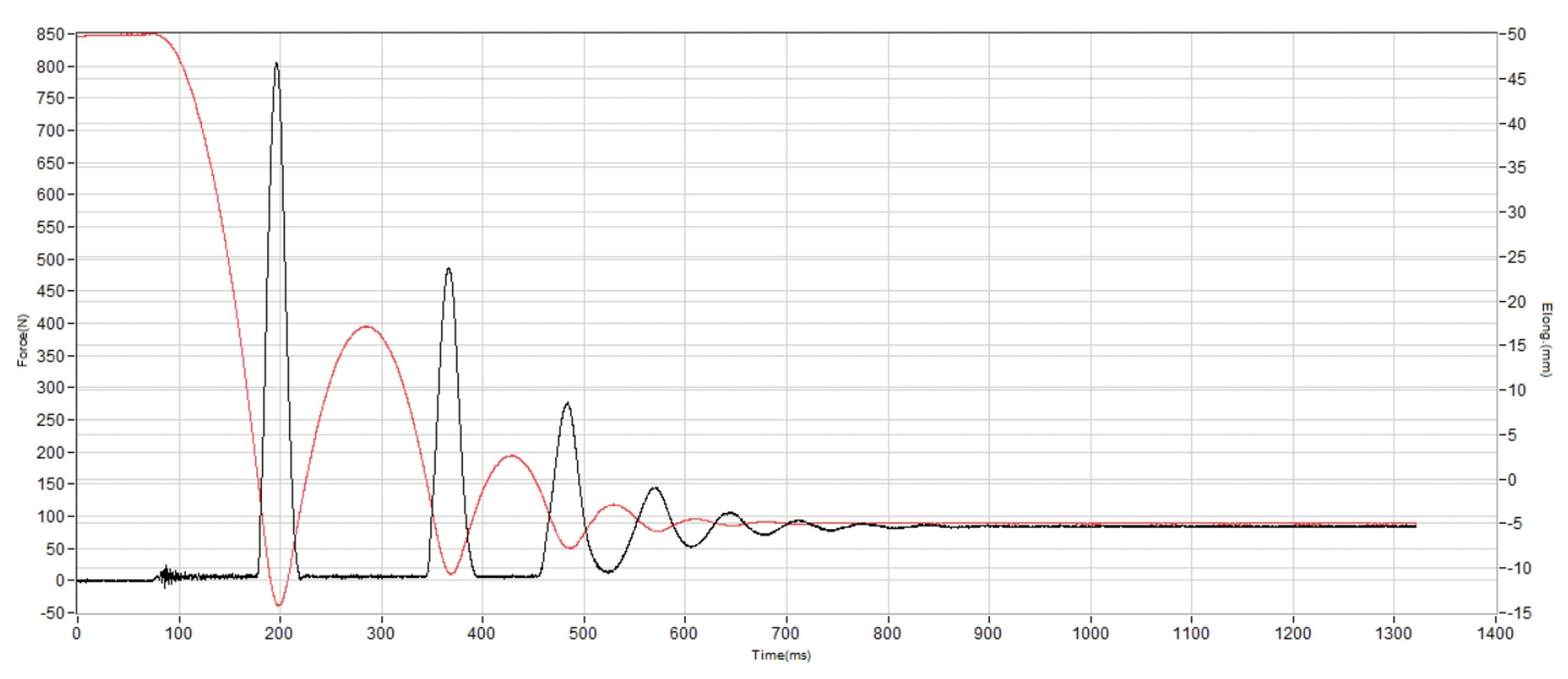
| Trail 2650 | 124 SA |
| Average | 108 SA |
Energy return
Because the shoe's PlyoGo midsole is made of standard EVA foam, it lacks the responsiveness of more advanced cushioning foams.
With a low energy return of 43.4%, it feels rather flat and dull, but on the bright side, it provides a more grounded, controlled footing.
| Trail 2650 | 43.3% |
| Average | 49.6% |
Heel stack
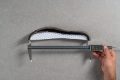
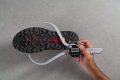
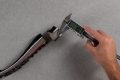
According to our calliper, the Trail 2650 has a standard hiking-shoe heel stack height of 33.3 mm. It's neither too low to the trail nor too isolated from it.
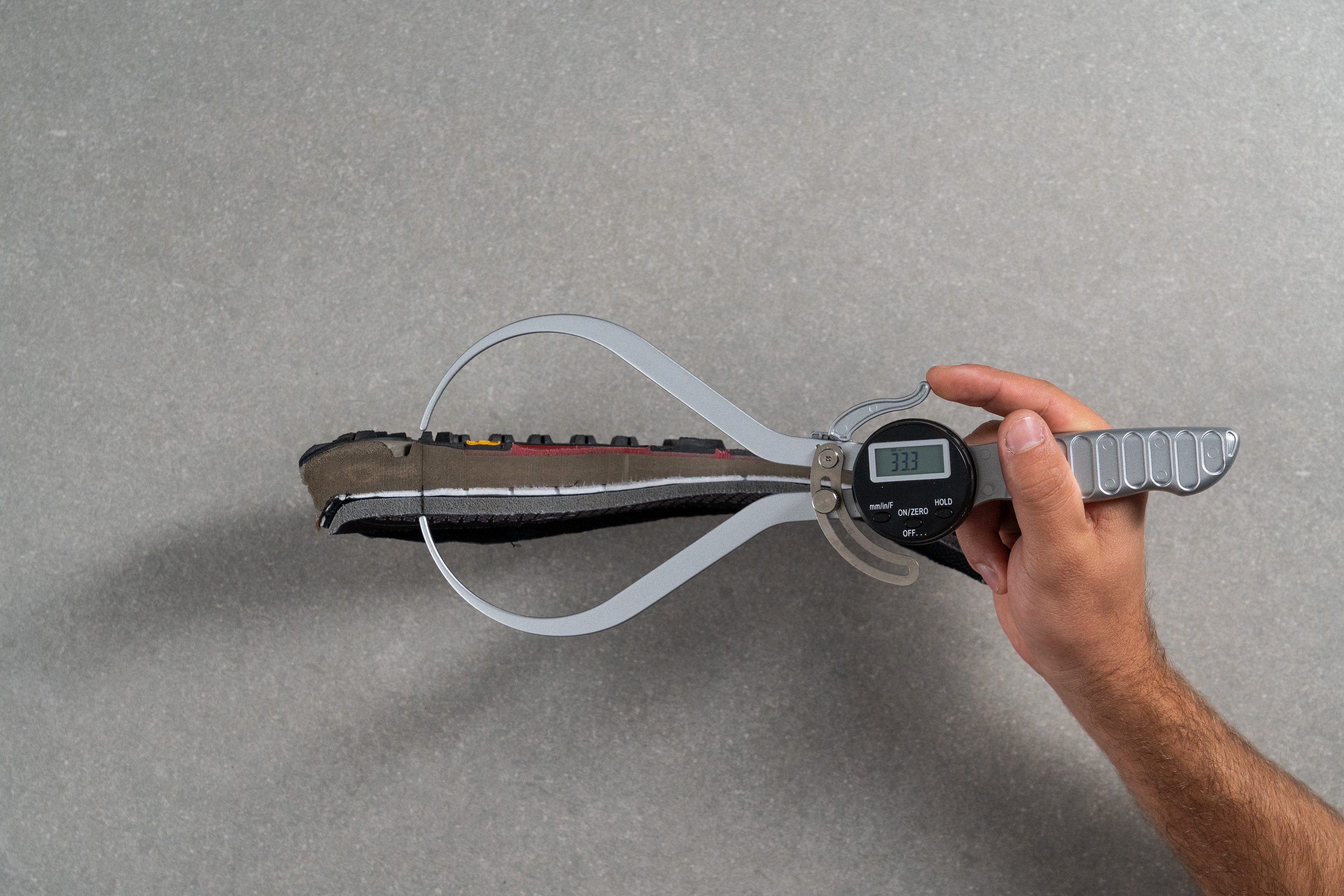
| Trail 2650 | 33.3 mm |
| Average | 34.0 mm |
Forefoot stack
However, the shoe's forefoot stack sits much closer to the ground with a below-average reading of 19.0 mm. That makes the wearer's ball-of-foot and toe joints more exposed to sharp rocks and debris.
But the TPU shank beneath the foam does help to soften the blow.
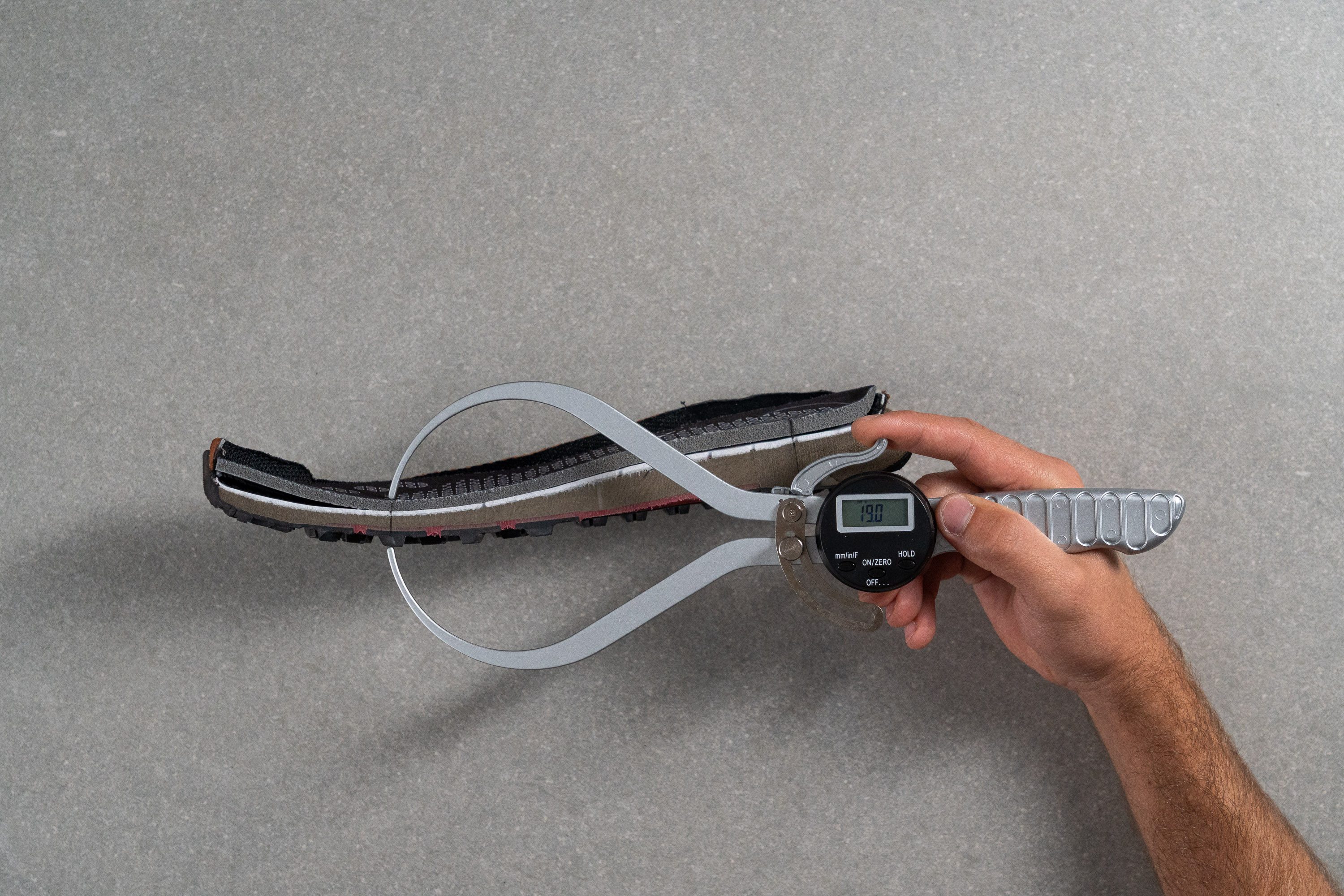
| Trail 2650 | 19.0 mm |
| Average | 22.9 mm |
Drop
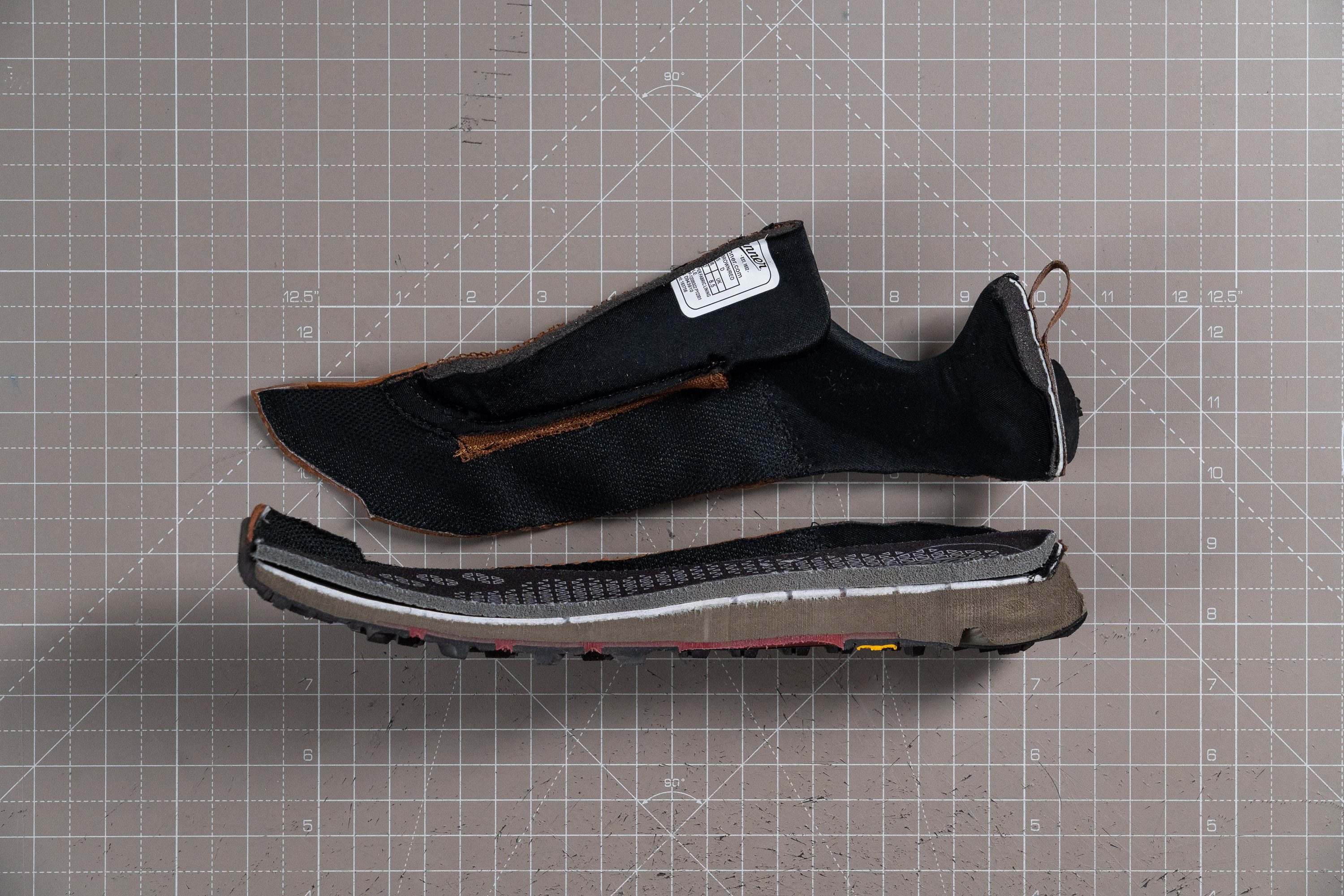
Because its forefoot sits so much lower than the heel, the shoe's heel-to-toe drop comes in at a rather high 14.3 mm!
This is way taller than the 8 mm offset stated in the shoe's product description, and can feel off to some hikers. As much as the heel elevation helps minimise stress on the Achilles and calves, it also tends to push the foot a bit too far forward, causing toe jamming and potentially heel slippage.
| Trail 2650 | 14.3 mm |
| Average | 11.2 mm |
Midsole softness
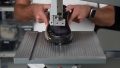
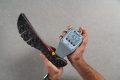
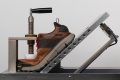
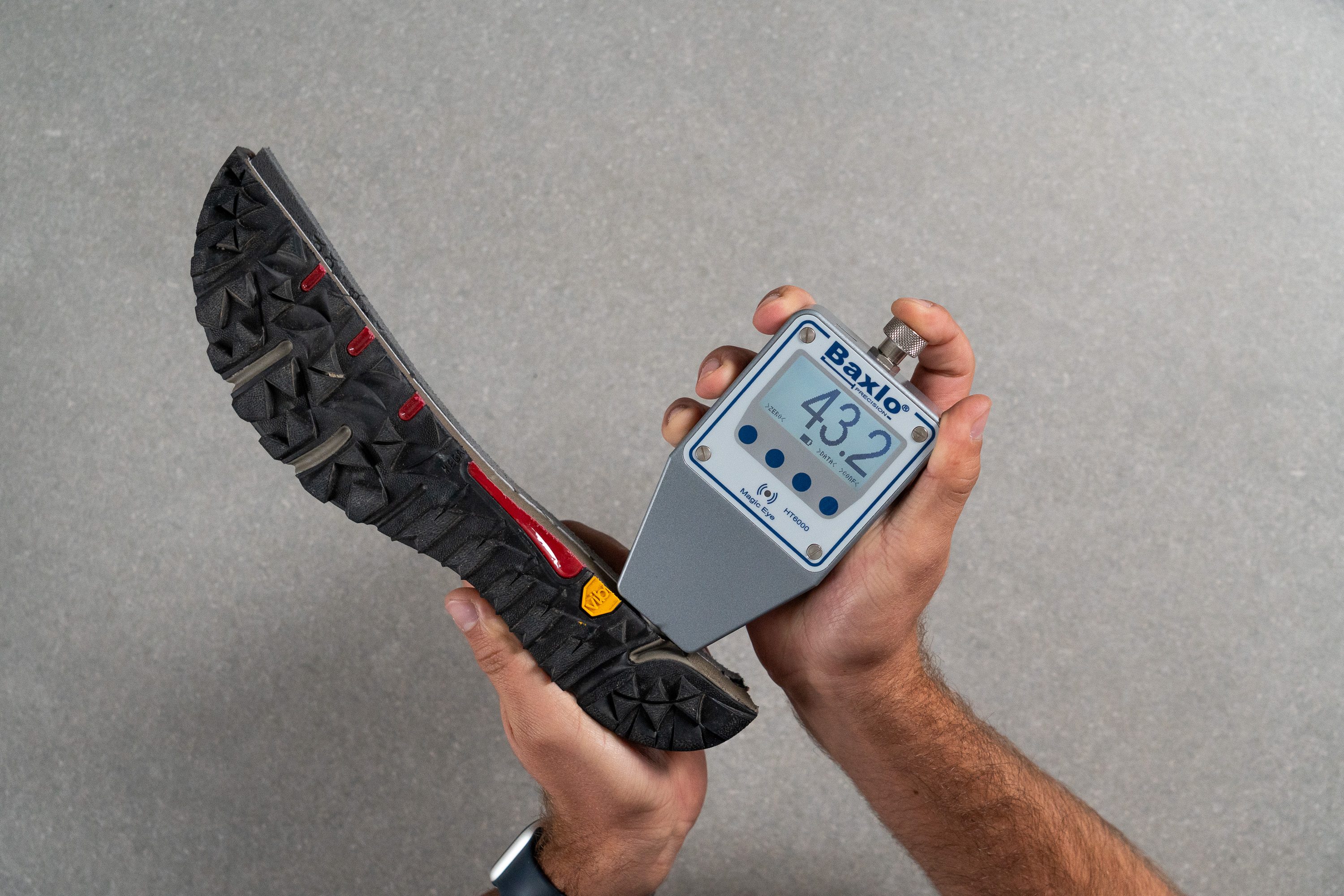
At 43.2 AC, our durometer confirmed that the Danner Trail 2650 uses a firm midsole compound.
It's not as hard and unforgiving as most hiking shoe platforms, but if you want a softer step-in feel, consider the Danner N45 (35.7 AC) with its nitrogen-infused cushioning foam.
| Trail 2650 | 43.2 AC |
| Average | 43.9 AC |
Rock plate
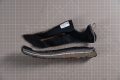
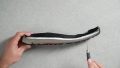
A full-length Trailguard TPU shank sits between the shoe's foam midsole and rubber outsole. It contributes to the firmness of the ride, but adds underfoot protection in return.
Size and fit
Size
Danner Trail 2650 fits true to size (126 votes).
Internal length
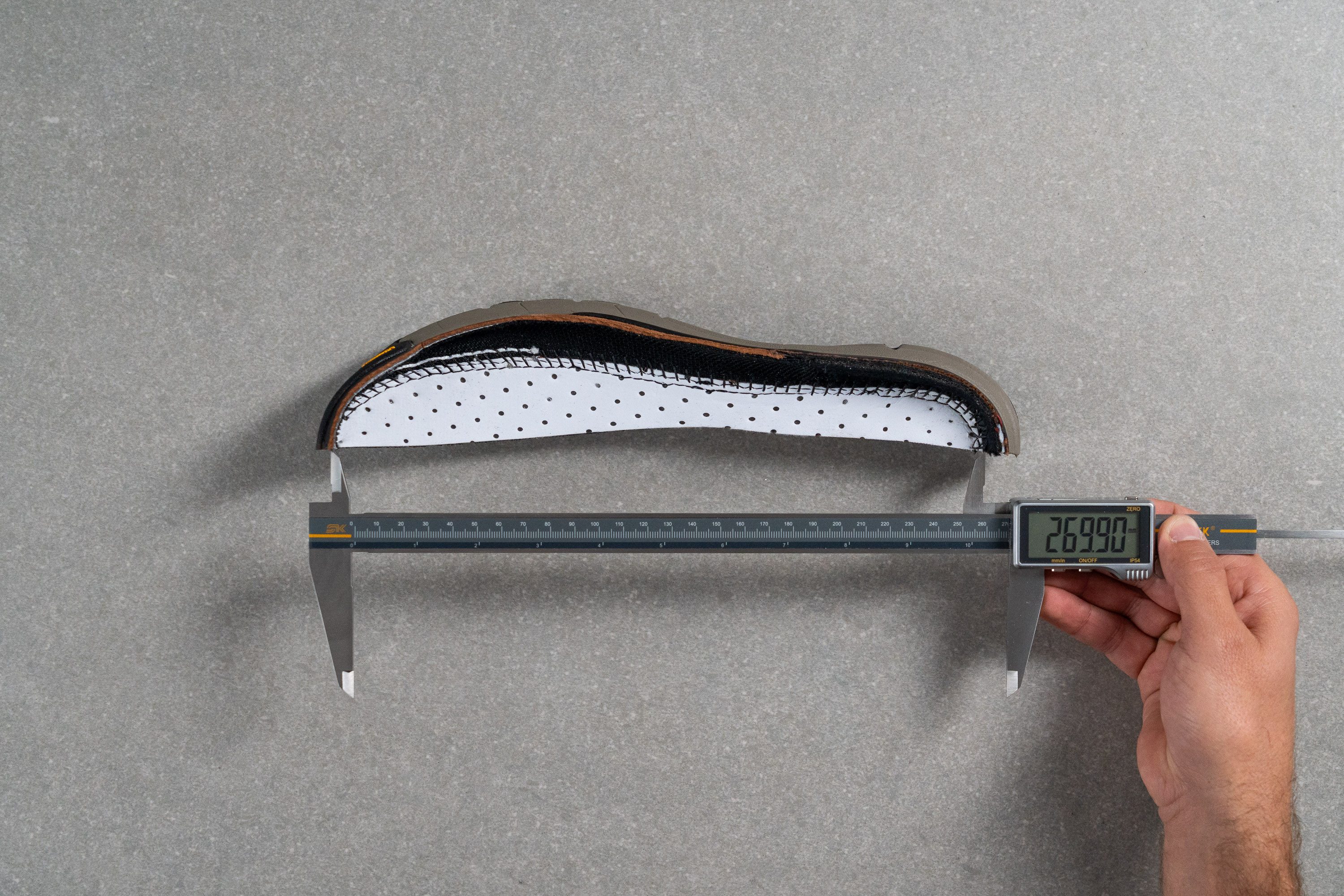
| Trail 2650 | 269.9 mm |
| Average | 268.9 mm |
Width / Fit
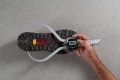
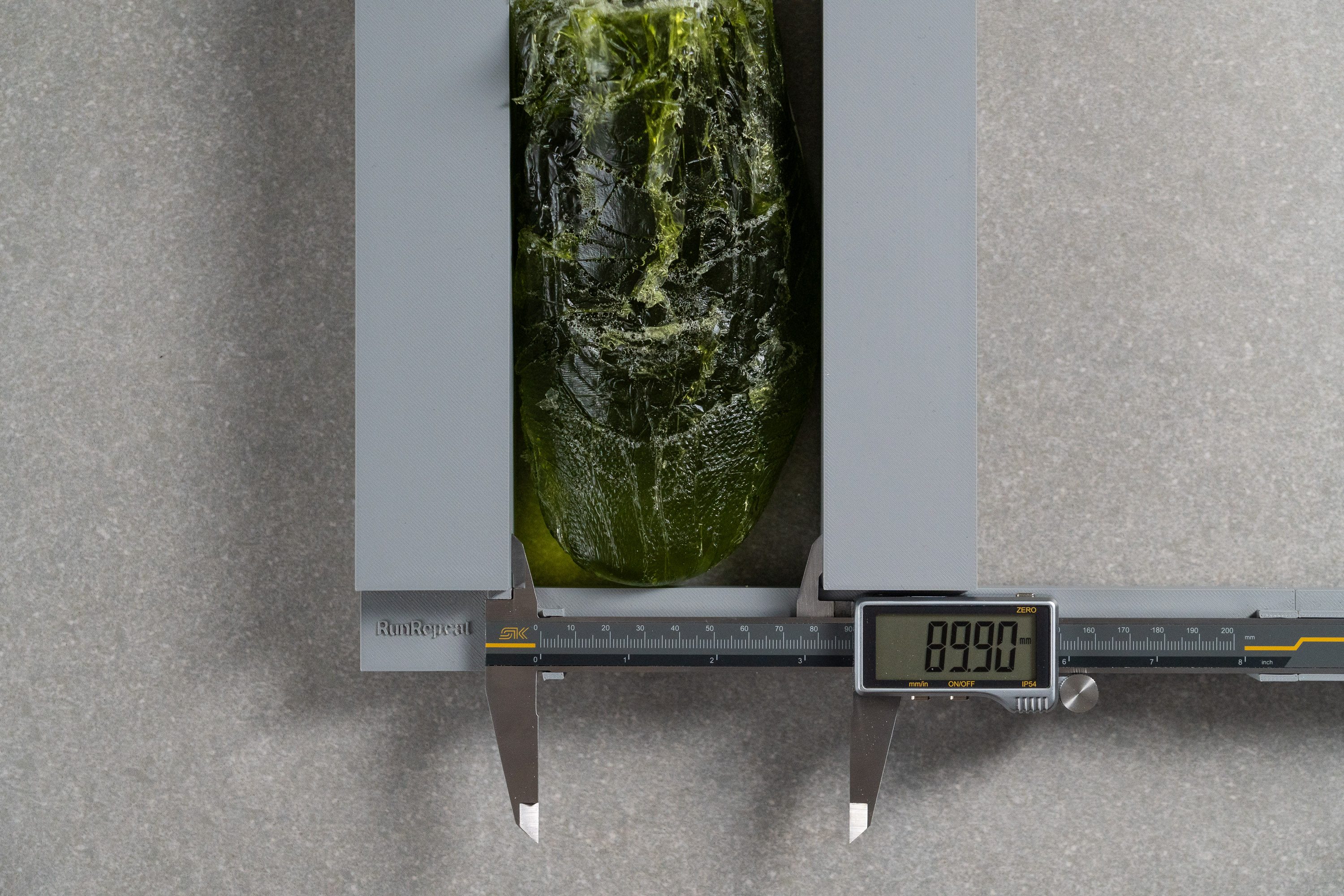
The Danner Trail 2650 is built on the same DT-6 last as the N45. But having created gel casts of both shoes, we found that the Trail 2650 is significantly narrower than the N45 and, by extension, the category average!
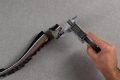
Using a digital calliper, we measured the widest part of the Trail 2650's cast at only 89.9 mm, which is by far the narrowest reading among our lab-tested hiking shoes!
But the good news is that this Danner shoe is also available in a wide width, which offers a roomier fit.
| Trail 2650 | 89.9 mm |
| Average | 94.0 mm |
Toebox width
The shoe's narrow forefoot also showed up in its toebox width measurement. Our calliper recorded as little as 69.0 mm in its big toe area, which is also on the narrow side of the hiking shoe spectrum.
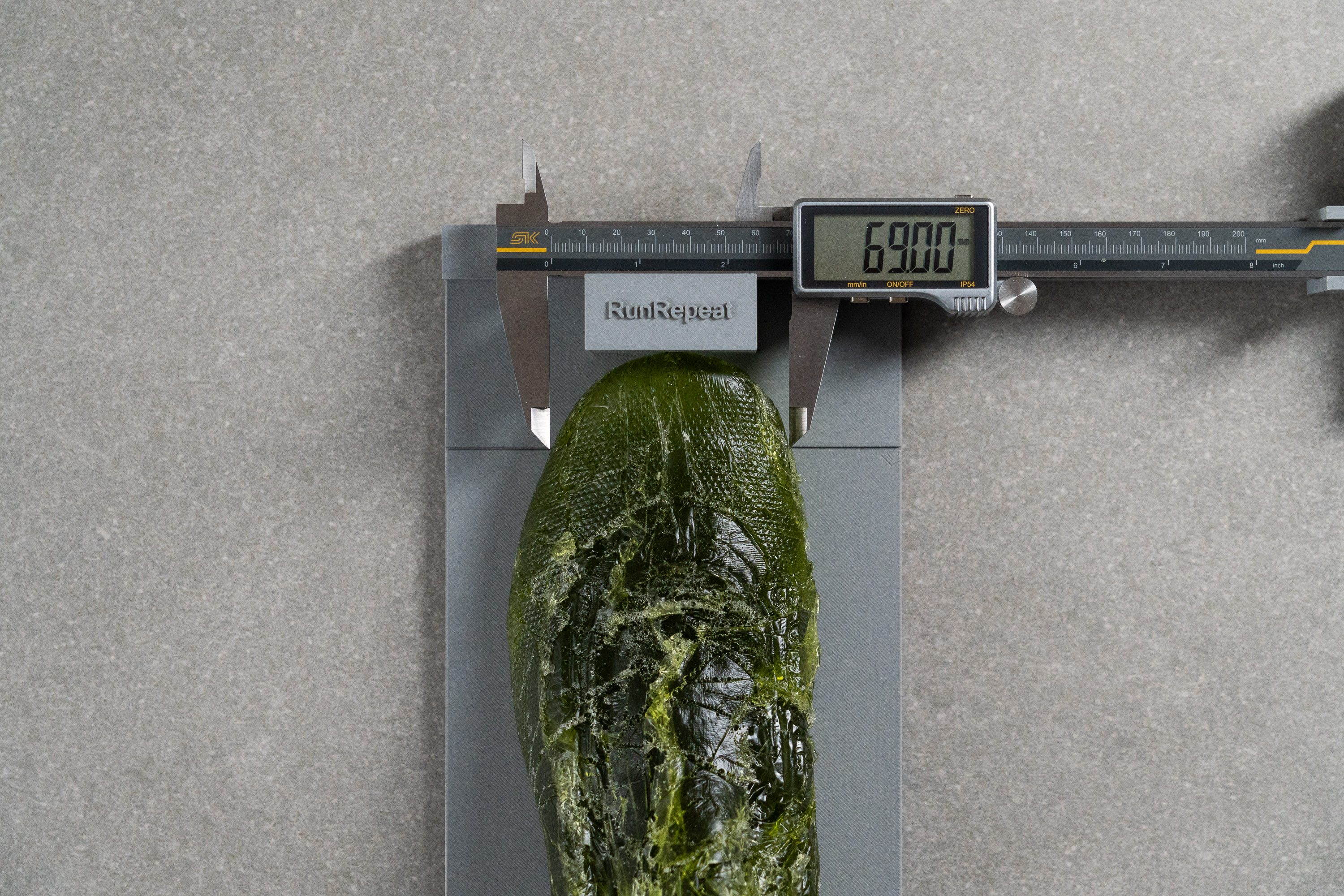
| Trail 2650 | 69.0 mm |
| Average | 71.9 mm |
Toebox height
As if the Trail 2650's toebox wasn't narrow enough horizontally, it also turned out to be pretty restrictive vertically.
With a low toebox height of 22.6 mm, the shoe's upper material sits very close to the toes.
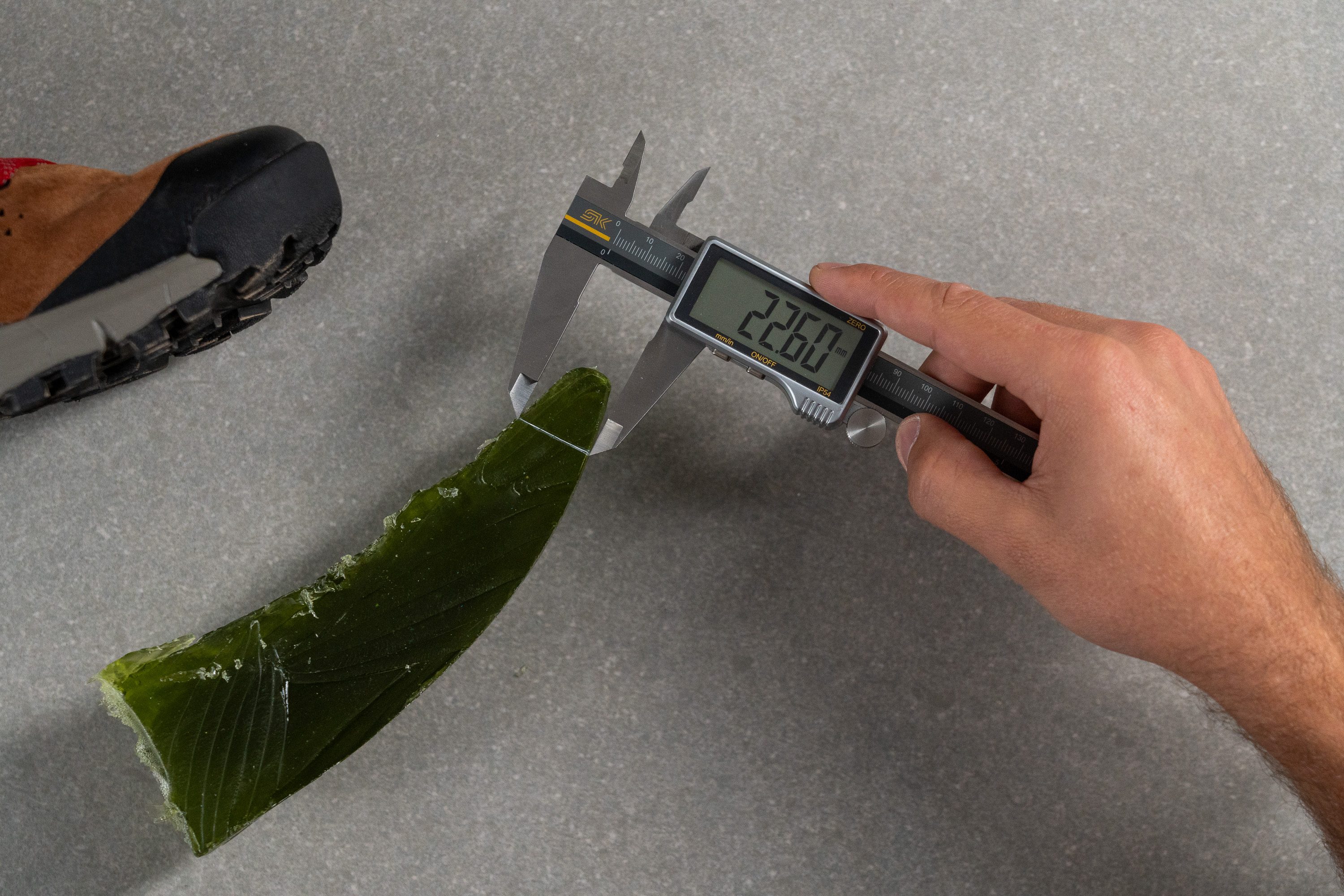
| Trail 2650 | 22.6 mm |
| Average | 27.5 mm |
Traction / Grip
Traction test
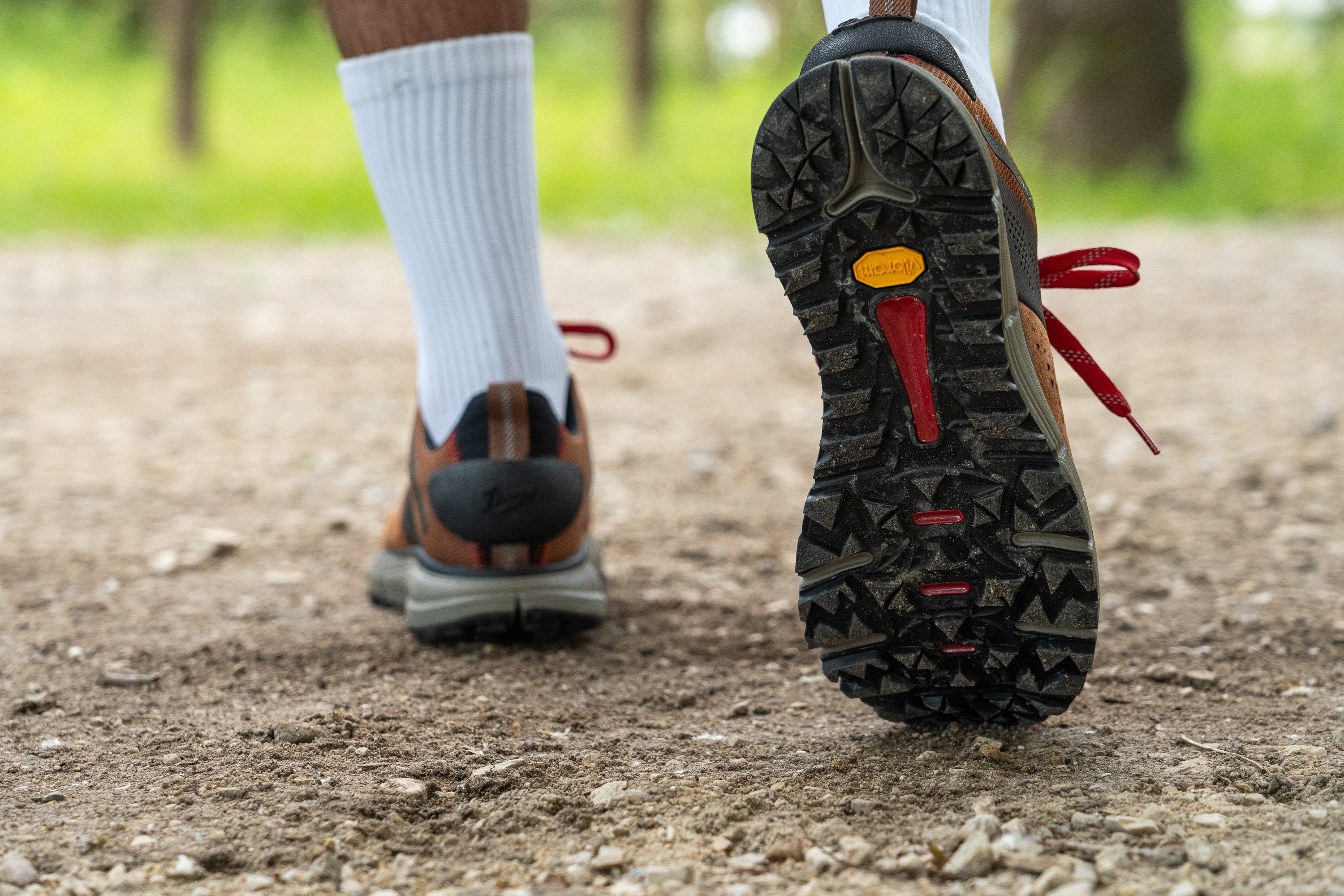
Featuring an exclusive Vibram 460 outsole with a Megagrip compound, the Danner Trail 2650 performed very well in our traction test.
As we brushed the shoe's forefoot against wet concrete at a set force and angle, our machine recorded a solid friction coefficient of 0.64. This implies a strong enough bite to stay surefooted on smoother surfaces, such as boulders, in both dry and wet conditions.
| Trail 2650 | 0.64 |
| Average | 0.68 |
Lug depth
Measuring its lug depth at 3.8 mm confirmed that this Danner shoe is ready to tackle varied terrain, including gravel, packed dirt, grass, moss, roots, and occasional rocks.
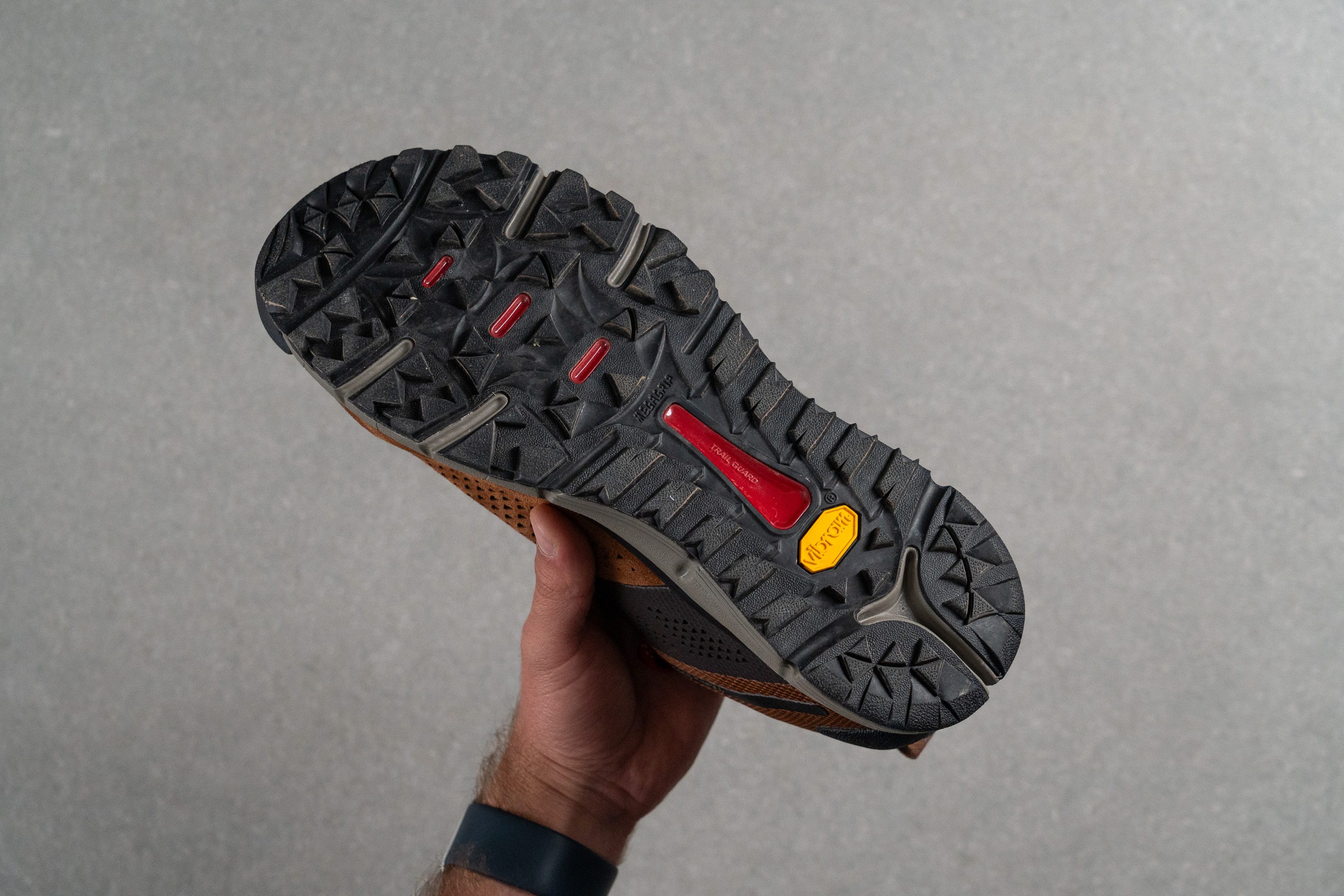
However, we would avoid muddy stretches whenever possible, given the shoe's lugs' limited depth and spacing.
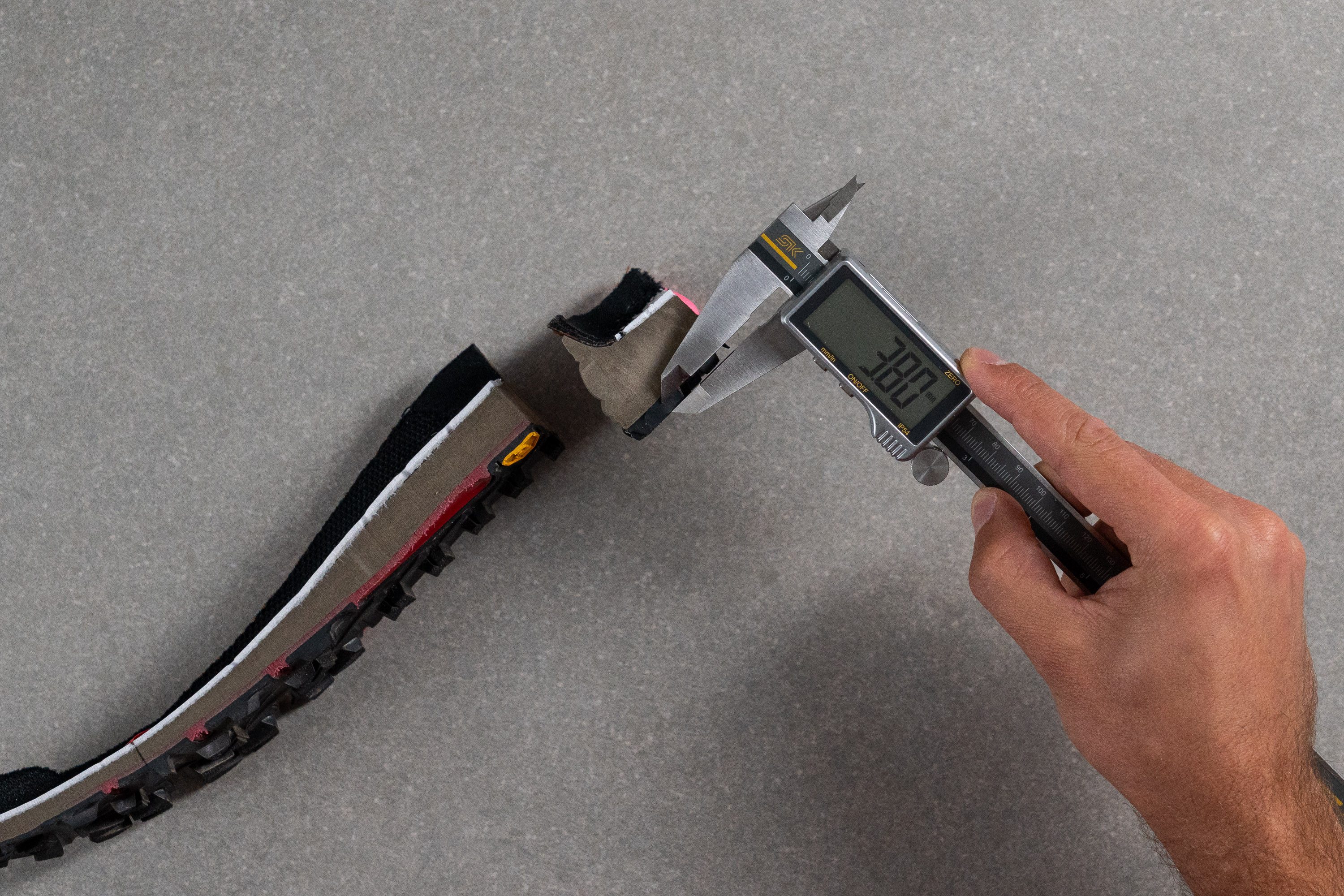
| Trail 2650 | 3.8 mm |
| Average | 3.9 mm |
Outsole design
The shoe's treads have a sharp, triangular shape that becomes more aggressive around the heel and forefoot, for descending and ascending, respectively. Described as 'self-adapting' by Danner, these lugs are pretty densely packed and become particularly helpful on steep ascents and descents.
Flexibility / Stiffness
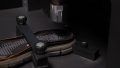
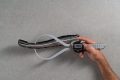
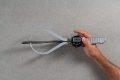
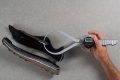
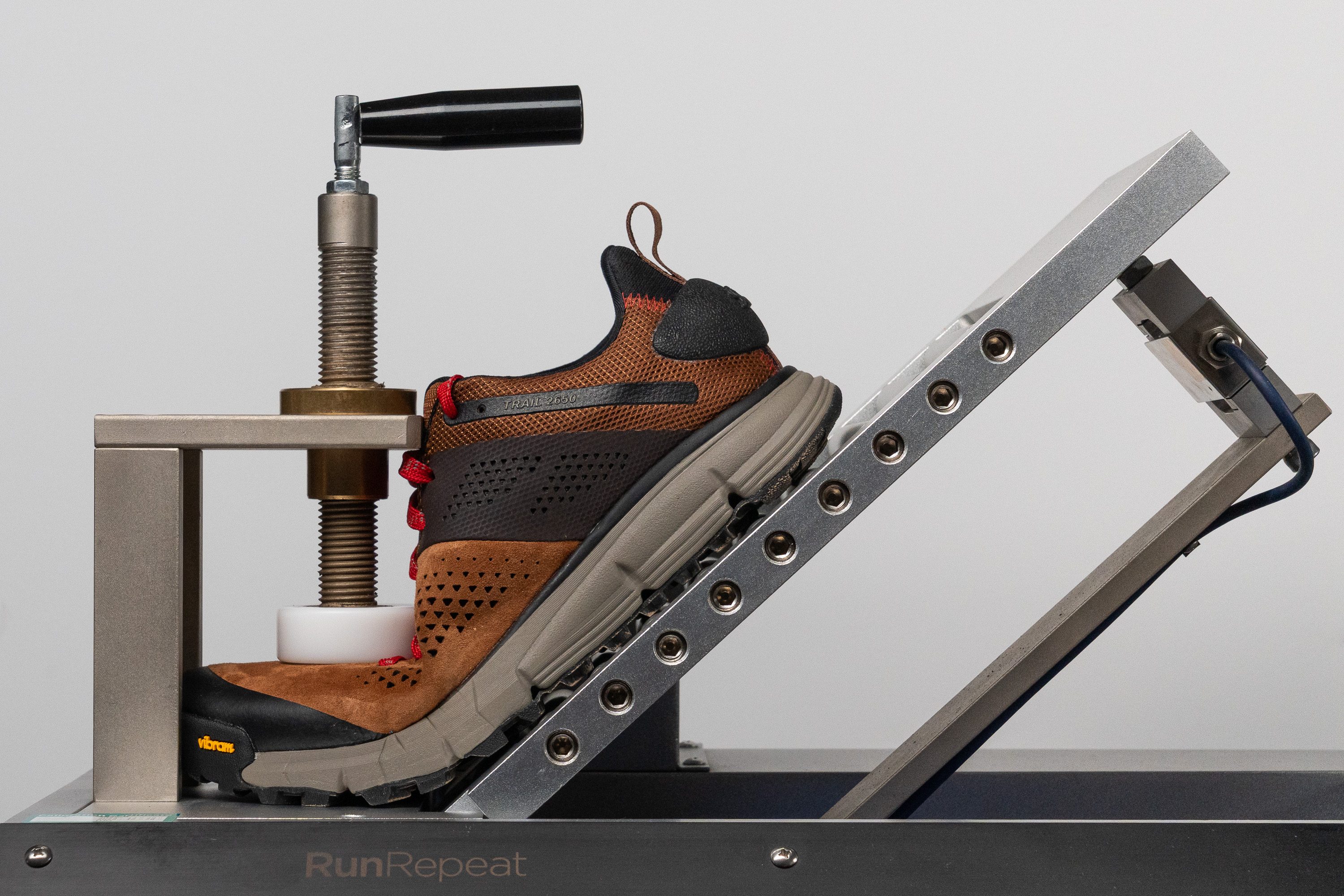
The Trail 2650 is fairly pliable for a shoe with a shank and a suede upper. We measured that it takes significantly less force to bend it by 30 degrees than it does to bend the average hiking shoe. In fact, it requires about 40% less force at 10.4N!
With this much forefoot flex, this Danner shoe's ride feels notably more natural and manoeuvrable, but also puts it further from technical hiking footwear.
| Trail 2650 | 10.4N |
| Average | 18.8N |
Weight
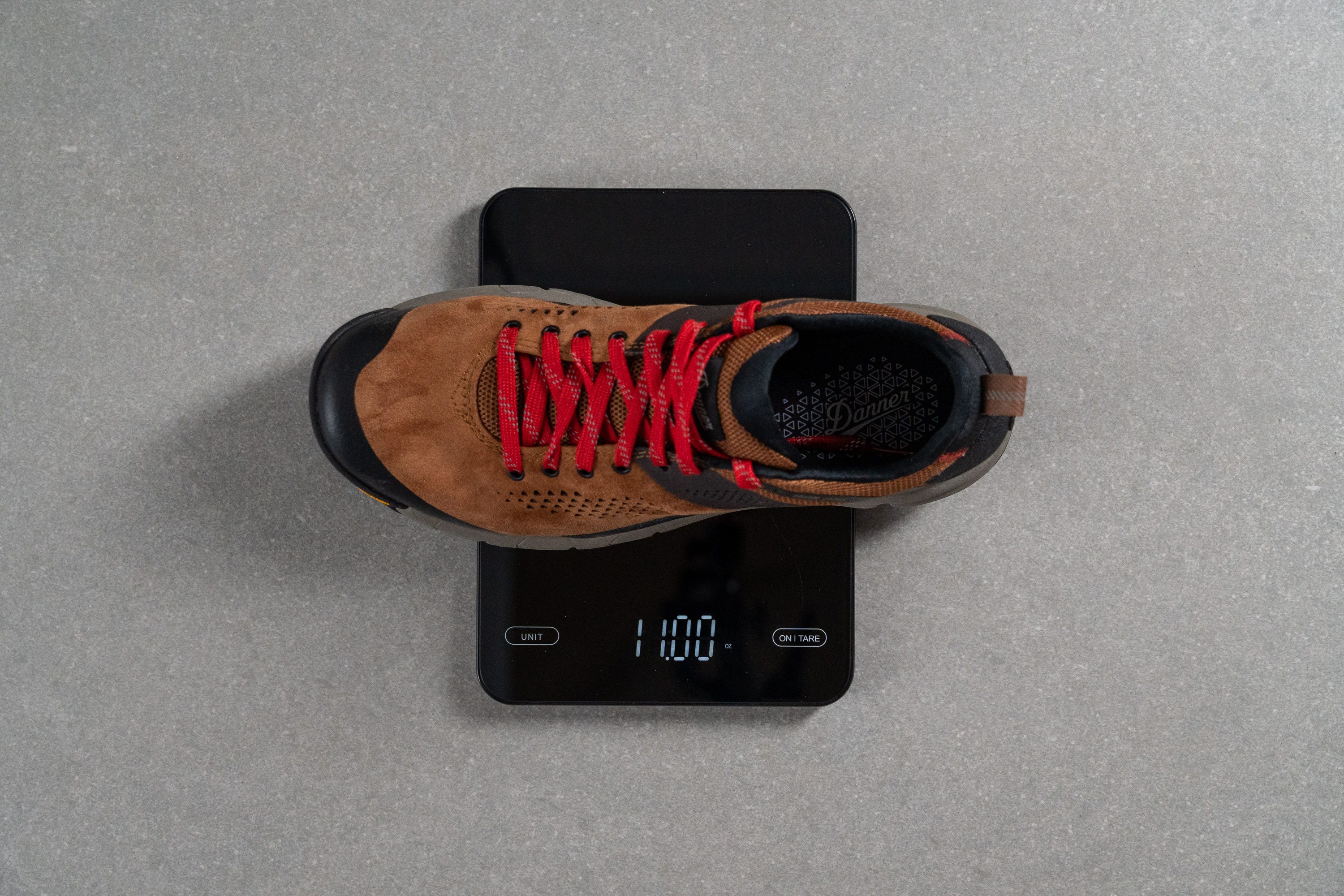
Aside from minimalist and trail running shoes, the Trail 2650 is actually the lightest hiking shoe in our catalogue!
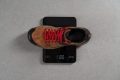
At only 11.0 oz (312g), it is even lighter than the Merrell Moab Speed 2 (11.6 oz/329g), which is impressive given the presence of suede, a rock plate, a protective toe bumper, and a heel cap. This Danner shoe never held us back from picking up the pace!
| Trail 2650 | 11.0 oz (312g) |
| Average | 13.2 oz (375g) |
Breathability
Breathability test
In this review, we are testing the non-waterproof version of the Danner Trail 2650, which is positioned for 'warm to cool weather.' For the waterproof option, see our review of the Trail 2650 GTX.
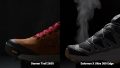
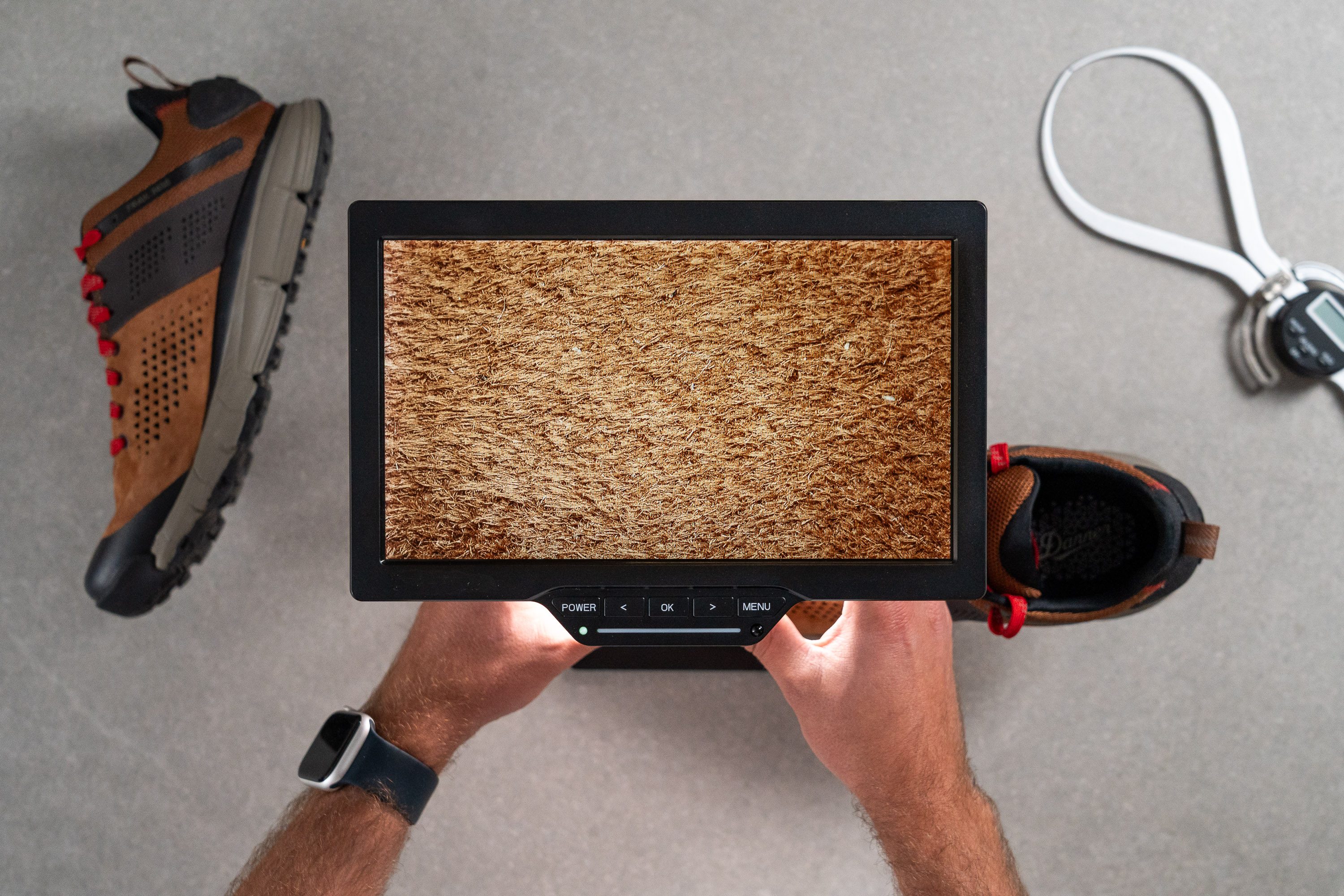
Despite its seemingly well-perforated upper, the shoe didn't allow smoke to escape the interiors so easily.
Its enclosed all-suede toebox blocks evaporation in the toe area, lowering our breathability score to the minimum 1 out of 5.
It's not as well-suited for hot desert stretches of the Pacific Coast Trail as we had hoped!
| Trail 2650 | 1 |
| Average | 2.2 |
Stability
Lateral stability test
Along with being Danner's lightest hiking shoe, the Trail 2650 also happens to be the least supportive one.
Made of suede and textile alone, its upper feels way too pliable to ensure lateral support on tricky terrain.
There are no additional support overlays, sidewalls, or stabilisers to inspire confidence when the trail gets rockier and less predictable, either.
Torsional rigidity
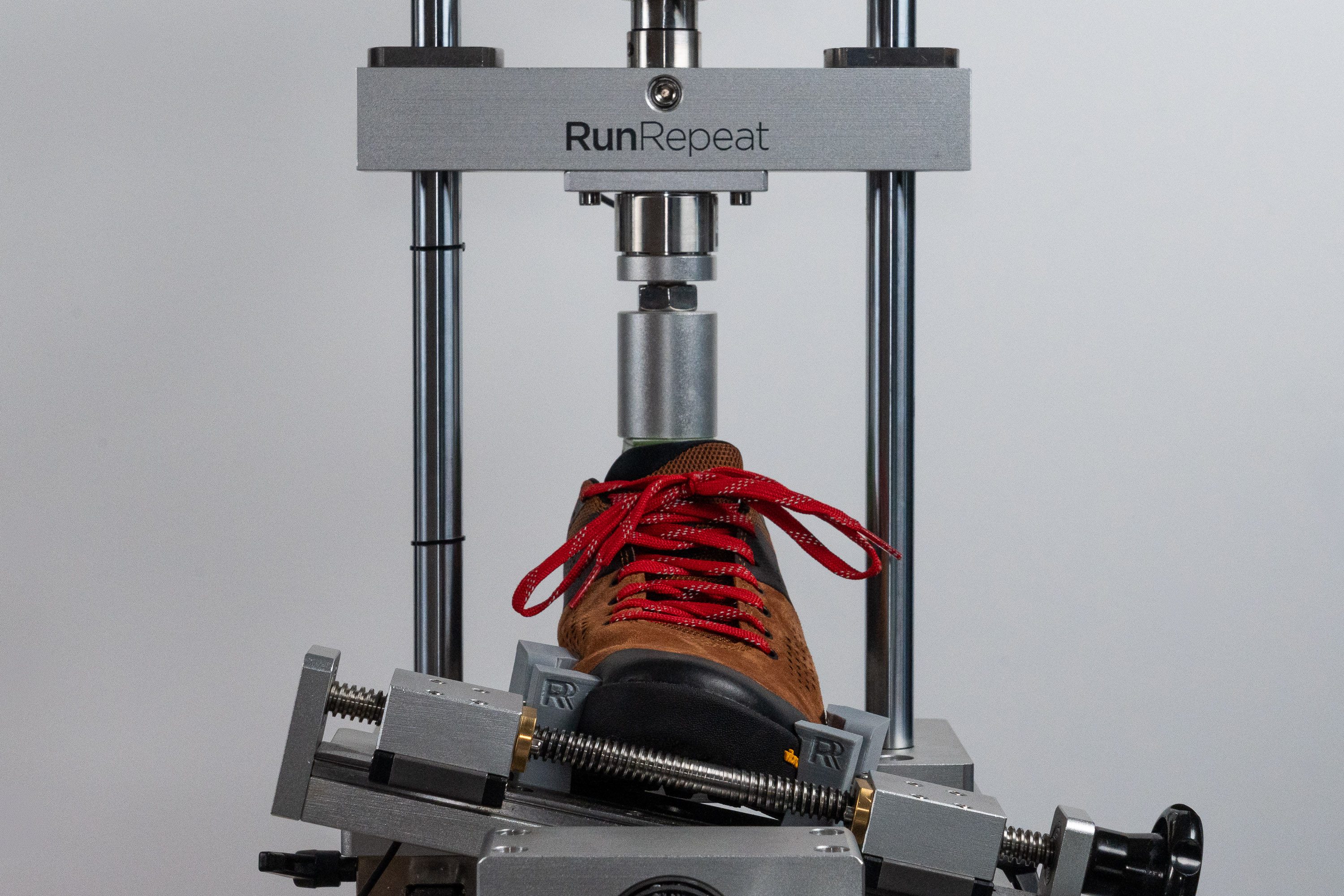
On a positive note, the shoe's firm, fairly grounded platform reduces the risk of undesirable ankle rolls, and the Trailguard TPU shank also adds a good amount of torsional rigidity.
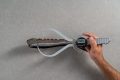
It takes a solid 15.8 Nm of torque to twist the Danner Trail 2650 in either direction, which is perfect for day hikes on moderate terrain.
| Trail 2650 | 15.8 Nm |
| Average | 19.1 Nm |
Heel counter stiffness
The shoe's EXO Heel System is a hit-or-miss feature that left us questioning its functionality.
Even though it's a stiff rubber pad, it doesn't quite work as a heel counter, as we were still able to fold the back of the shoe's upper without issue. That explains our low heel-counter stiffness score of 1 out of 5.
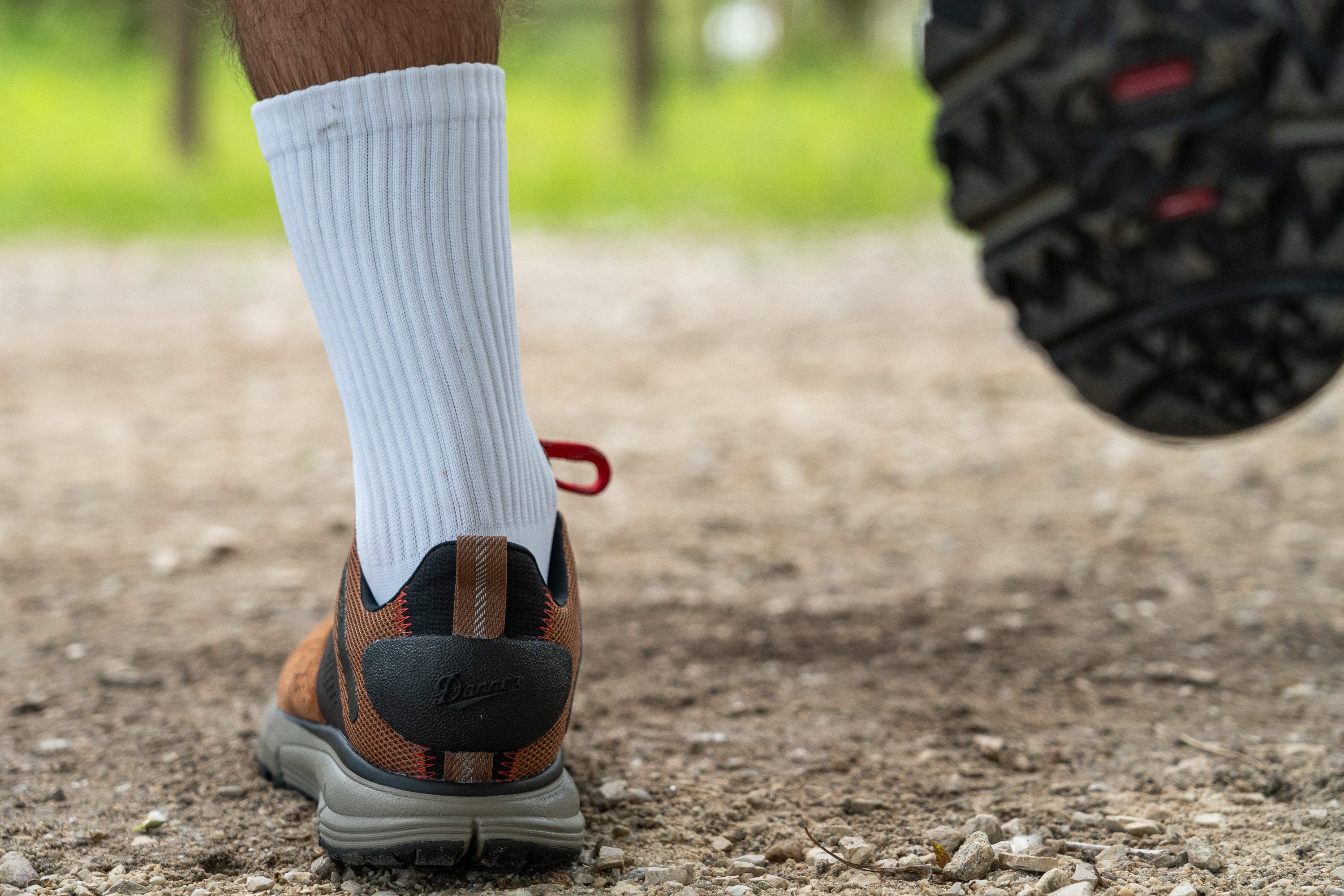
One could argue it serves as a heel bumper, but we never really felt like it was necessary, given that the Trail 2650 is not the best choice for rocky terrain in the first place. We could easily do without this add-on in exchange for trimming down some weight.
| Trail 2650 | 1 |
| Average | 3.7 |
Midsole width - forefoot
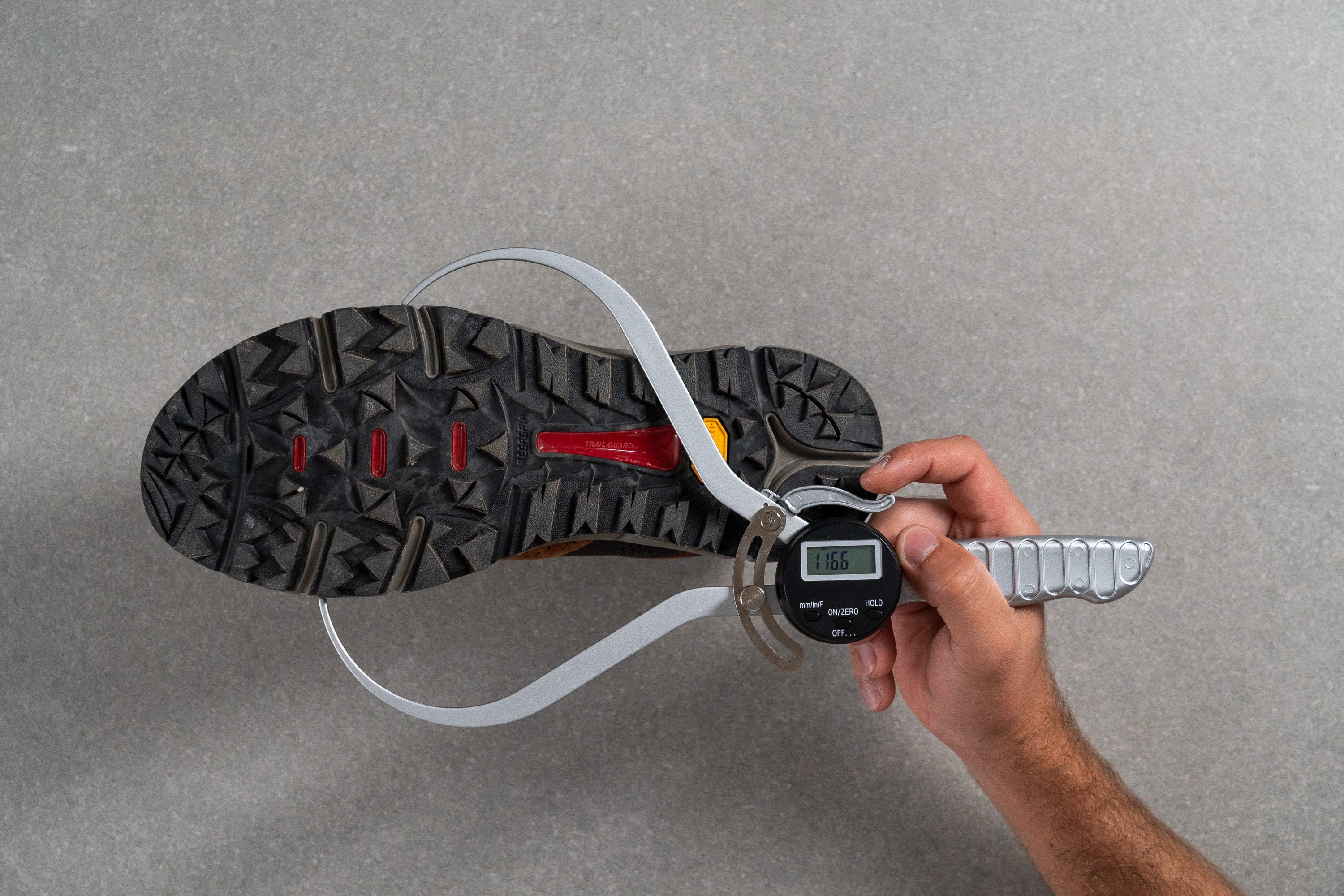
Promising 'slightly more width in the forefoot,' Danner offers a wider forefoot base in the Trail 2650, indeed. Measuring its most extended points with a digital calliper, we recorded an above-average reading of 116.6 mm.
This increased surface area helps stabilise the foot and distribute the load more evenly, especially when some load is involved.
| Trail 2650 | 116.6 mm |
| Average | 112.6 mm |
Midsole width - heel
The heel width, on the other hand, remains on par with the average at 86.4 mm. This is broad enough to ensure stability but not so much that the shoe feels too clunky or platformy.
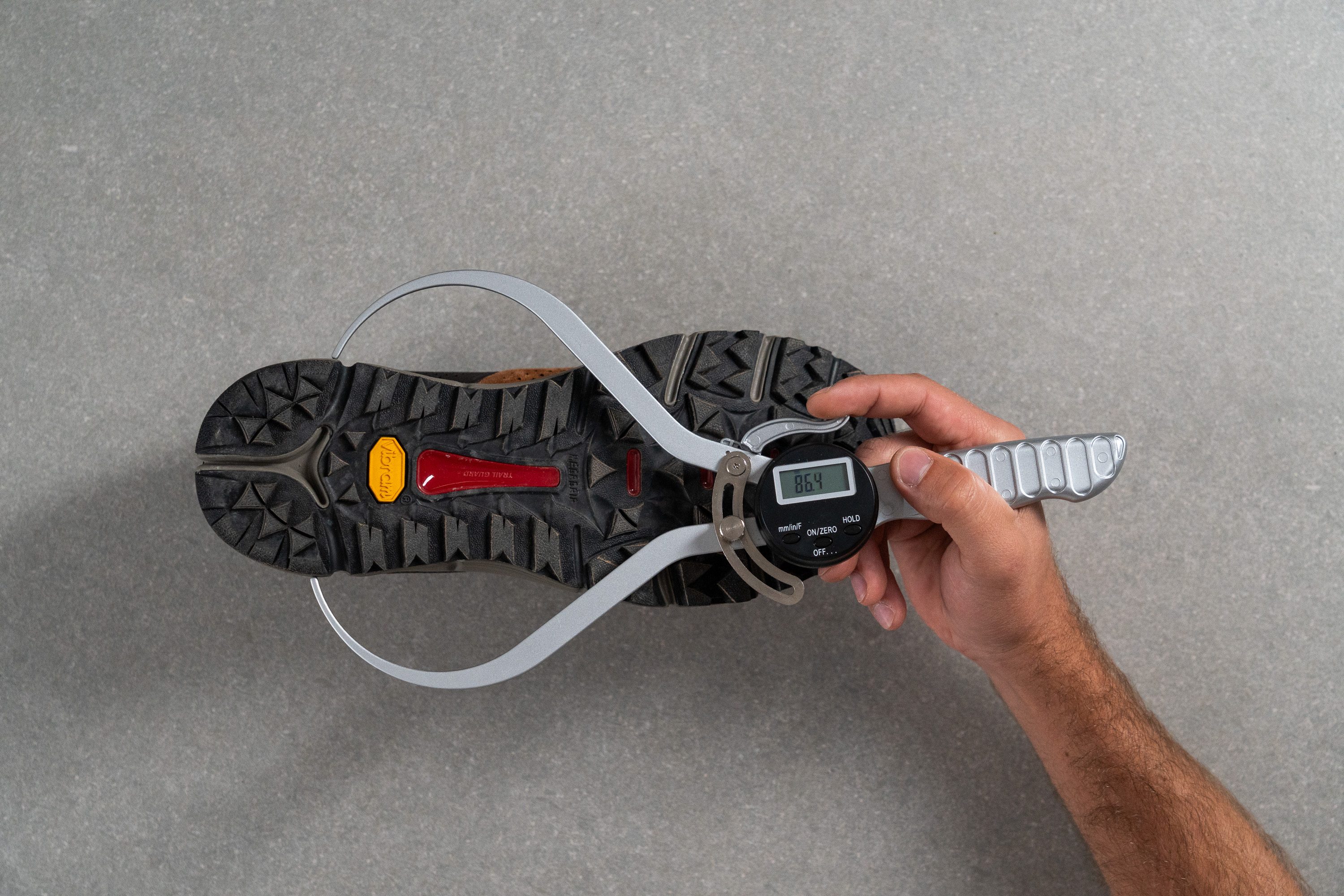
| Trail 2650 | 86.4 mm |
| Average | 88.6 mm |
Durability
Toebox durability
It may not seem like a heavily reinforced shoe, but the Danner Trail 2650 is well prepared for some wear and tear. Its durable suede upper, in particular, stood up to our Dremel test with flying colours, showing only cosmetic damage.
That helped keep the shoe's toebox durability score high at 4 out of 5.
| Trail 2650 | 4 |
| Average | 3.6 |
Heel padding durability
However, the shoe's interior fabric left us quite disappointed by tearing way too quickly under the Dremel.
Unfortunately, the damage was significant enough to lower our heel padding durability score to 2 out of 5.
| Trail 2650 | 2 |
| Average | 3 |
Outsole durability
Luckily, the shoe's outsole performed rather well with a moderate dent of 0.9 mm. But to be honest, we expected slightly better results from a shoe at this price.
| Trail 2650 | 0.9 mm |
| Average | 0.9 mm |
Outsole thickness
Another point of concern is the shoe's thinner-than-average outsole layer, which measured only 1.8 mm on our calliper.
Thus, we wouldn't expose the Trail 2650's to highly abrasive surfaces like volcanic grit, lava rock, or talus if you expect long-term outsole durability.
P.S. It should also be noted that the Trail 2650 cannot be resoled like most Danner shoes and boots.
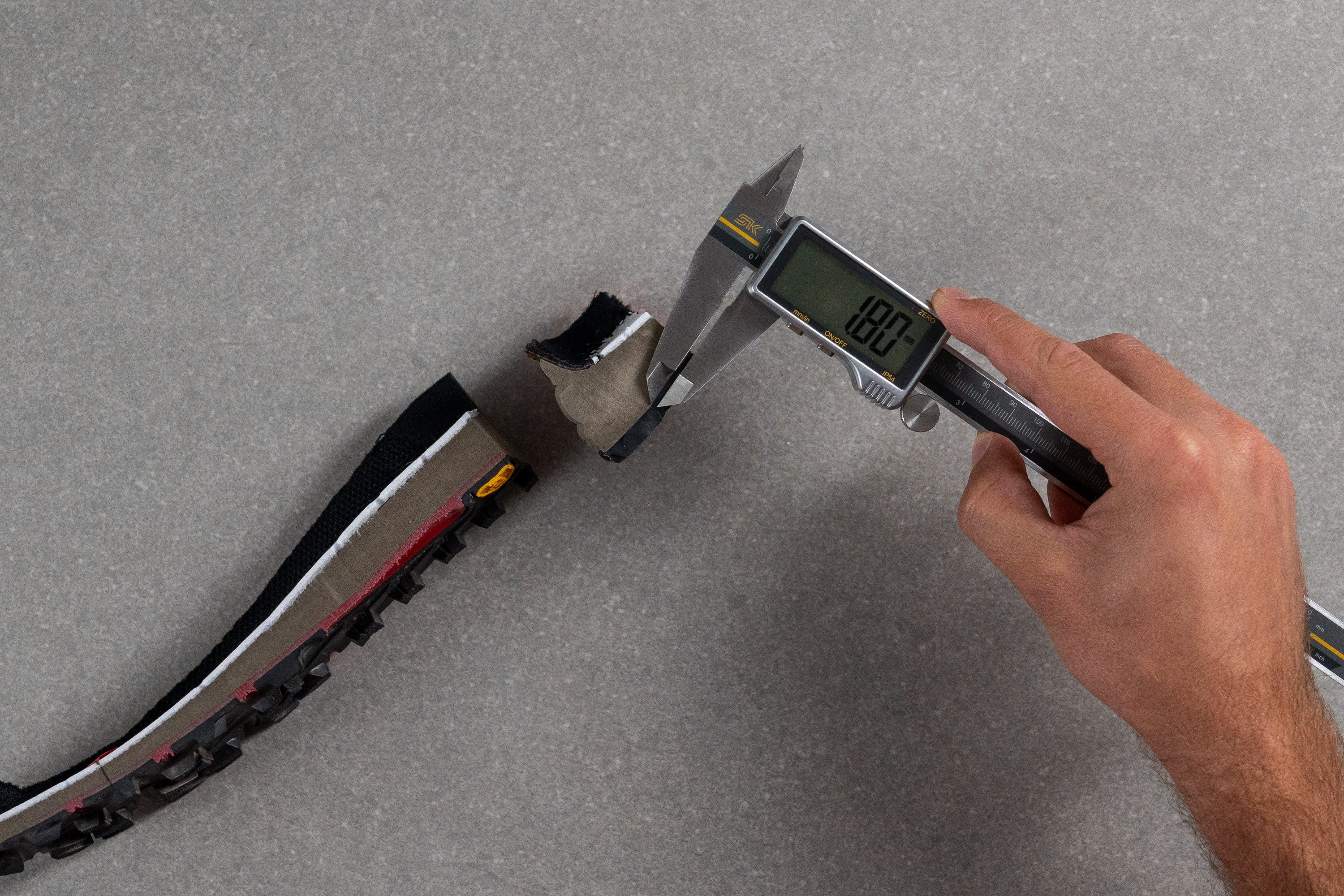
| Trail 2650 | 1.8 mm |
| Average | 2.3 mm |
Misc
Insole thickness
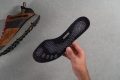
The Danner Trail 2650 welcomes the foot with a pleasantly comfortable step-in feel. Part of it is provided by a generously padded OrthoLite Footbed, with an above-average thickness of 6.6 mm at the heel.
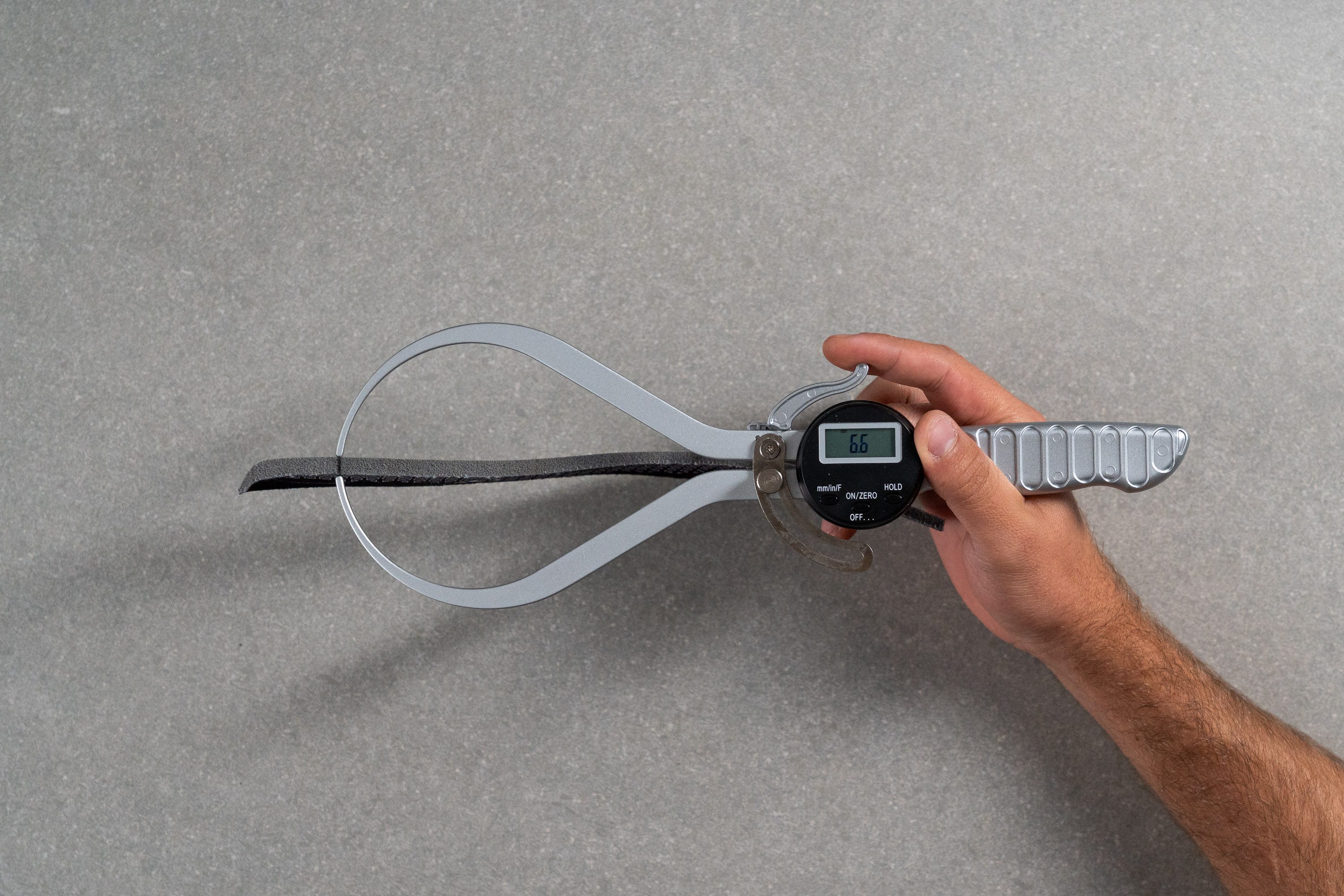
| Trail 2650 | 6.6 mm |
| Average | 5.3 mm |
Removable insole
The insole can be removed and swapped for a custom orthotic. But please note that finding a perfectly fitting replacement can be a challenge due to the shoe's unusually narrow fit (in a medium width).
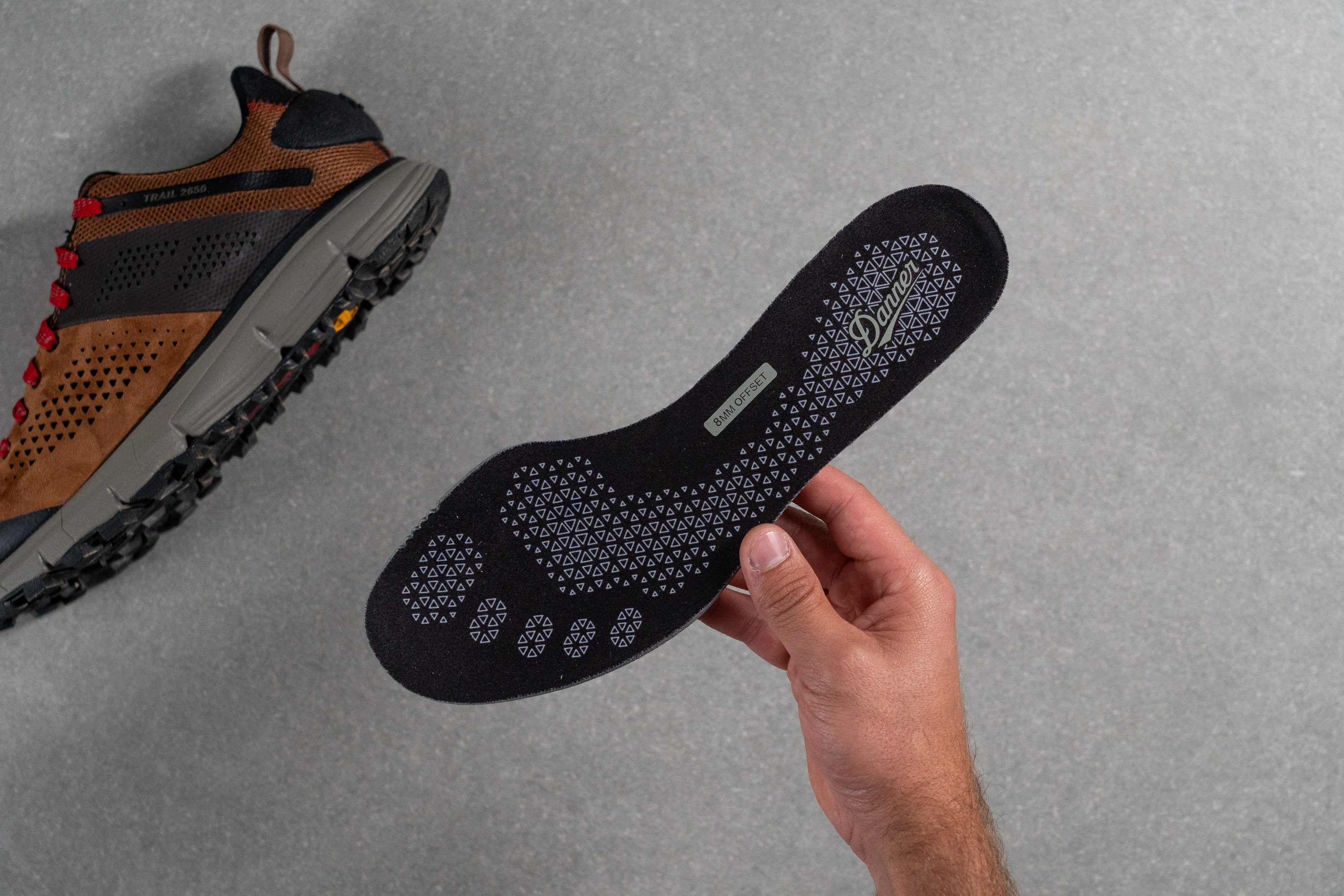
| Trail 2650 | Yes |
Midsole softness in cold (%)
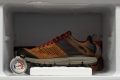
Already firm at room temperature, the Trail 2650's midsole doesn't become noticeably harder in cold temperatures. Having kept the shoe in the freezer for 20 minutes, we repeated our durometer measurement and recorded a standard 18% increase in firmness, which is normal for a hiking shoe.
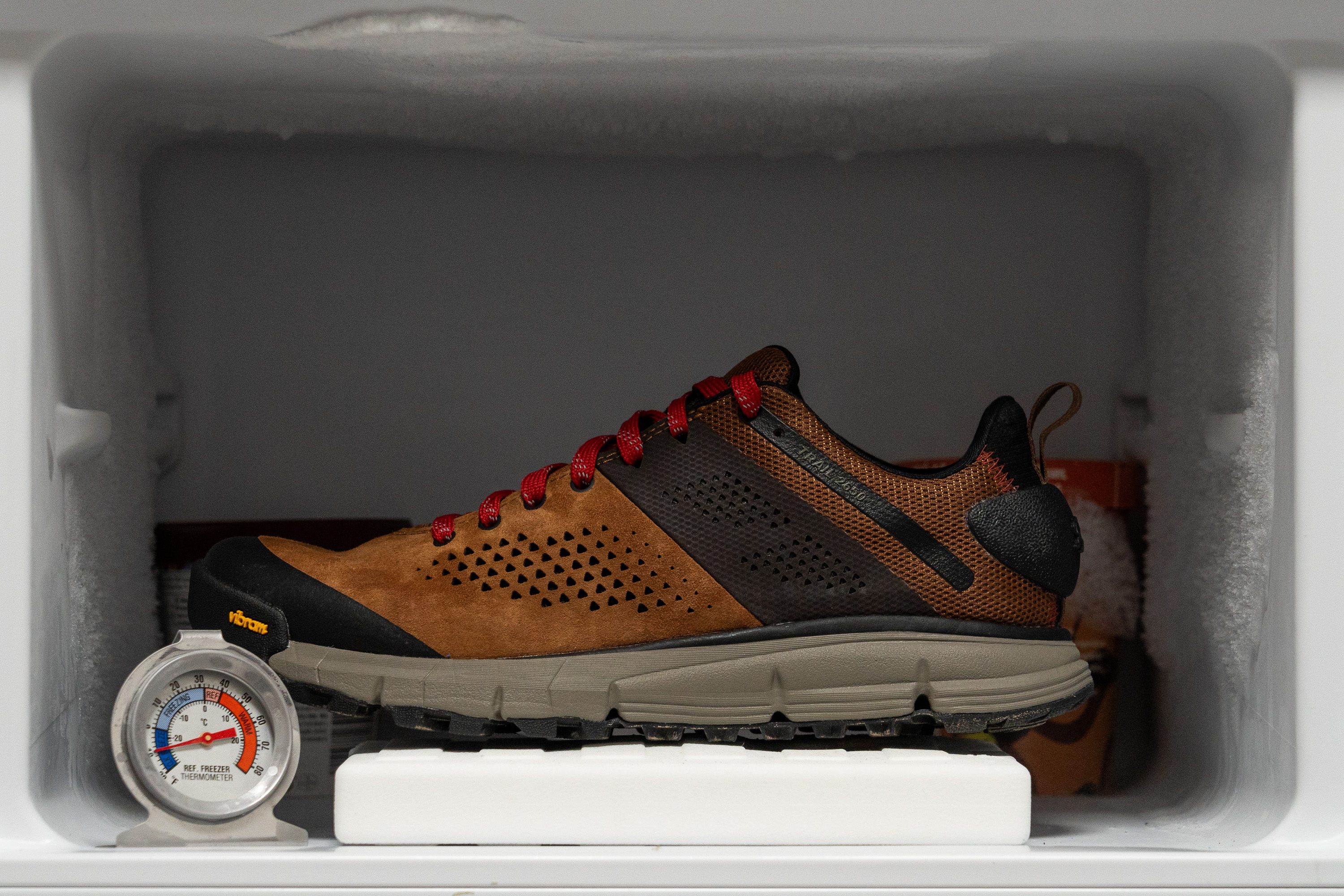
| Trail 2650 | 18% |
| Average | 18% |
Reflective elements
The Trail 2650 doesn't have any large reflective elements, but it offers some visibility in the darker hours with reflective threads in its laces and fabric heel tab.
| Trail 2650 | Yes |
Tongue padding
The shoe's upper is not as abundantly padded as most other hiking shoes, but it packs enough foam in the collar and tongue to minimise pressure points and provide comfort.
We measured its tongue thickness at 6.9 mm.
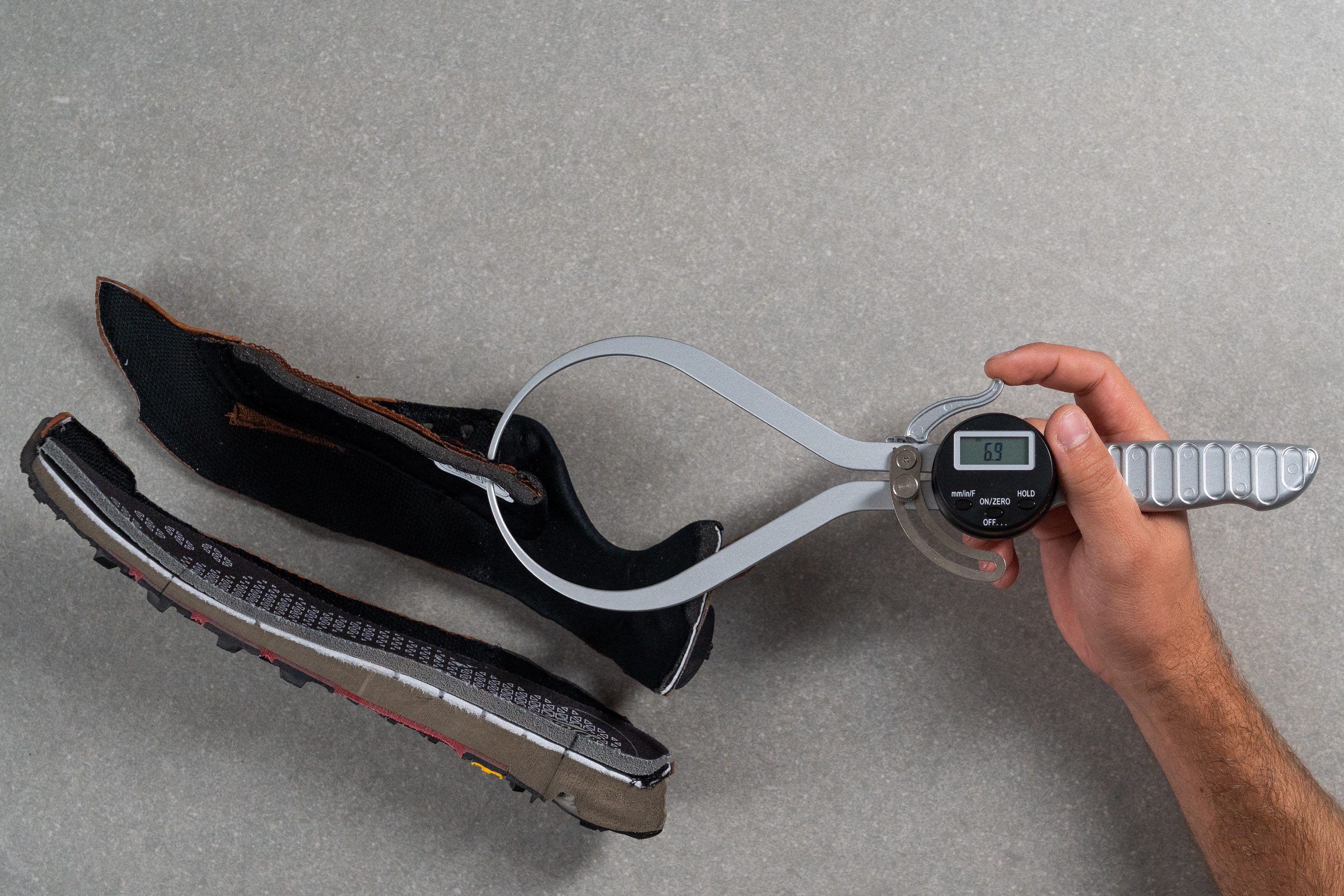
| Trail 2650 | 6.9 mm |
| Average | 9.8 mm |
Tongue: gusset type
Attached to the upper on both sides, the shoe's fully gusseted tongue offers a more foot-hugging fit while blocking small debris, pebbles, and sand from entering the shoe.
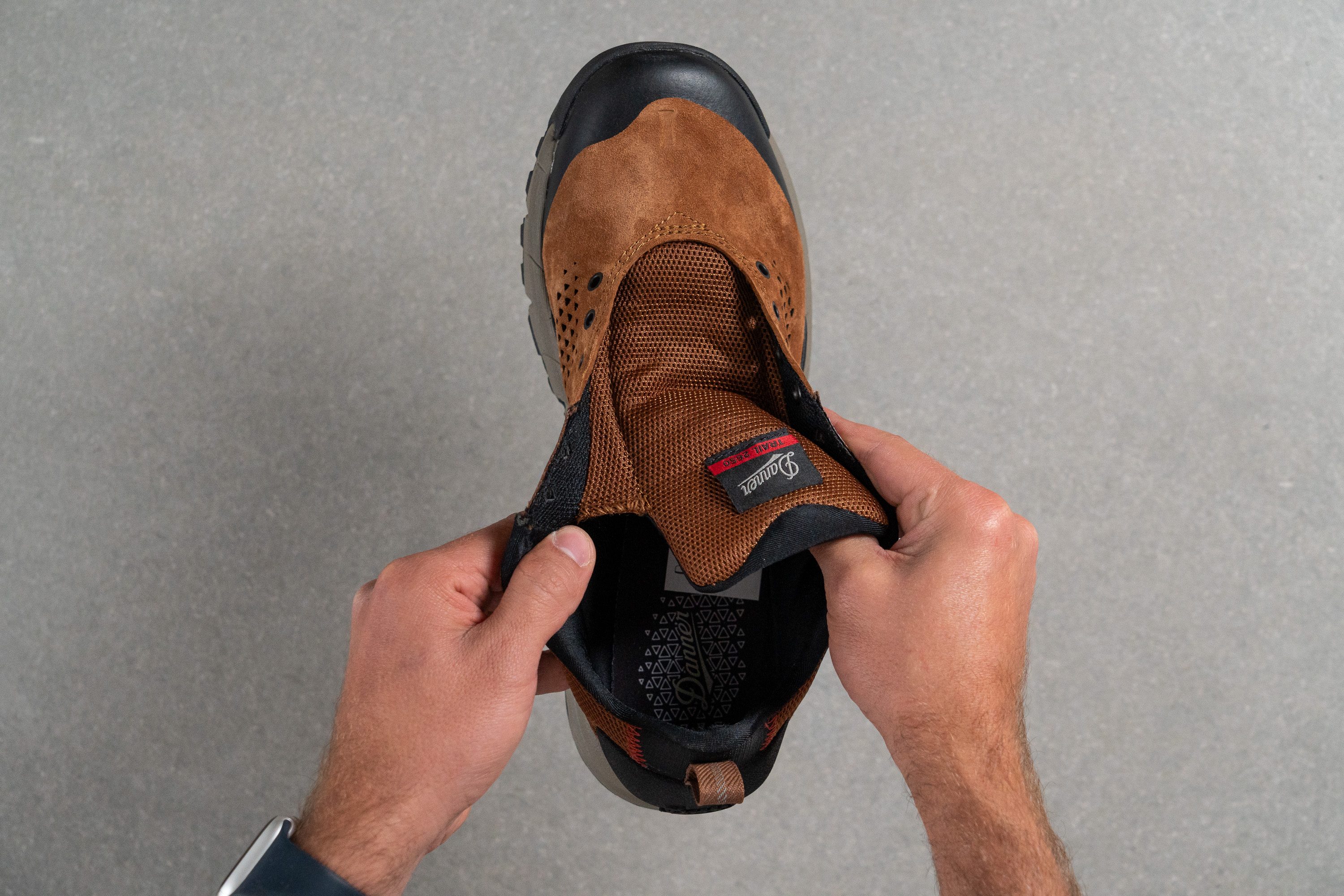
| Trail 2650 | Both sides (full) |
Heel tab
A fabric finger loop makes entry easier in this Danner shoe.
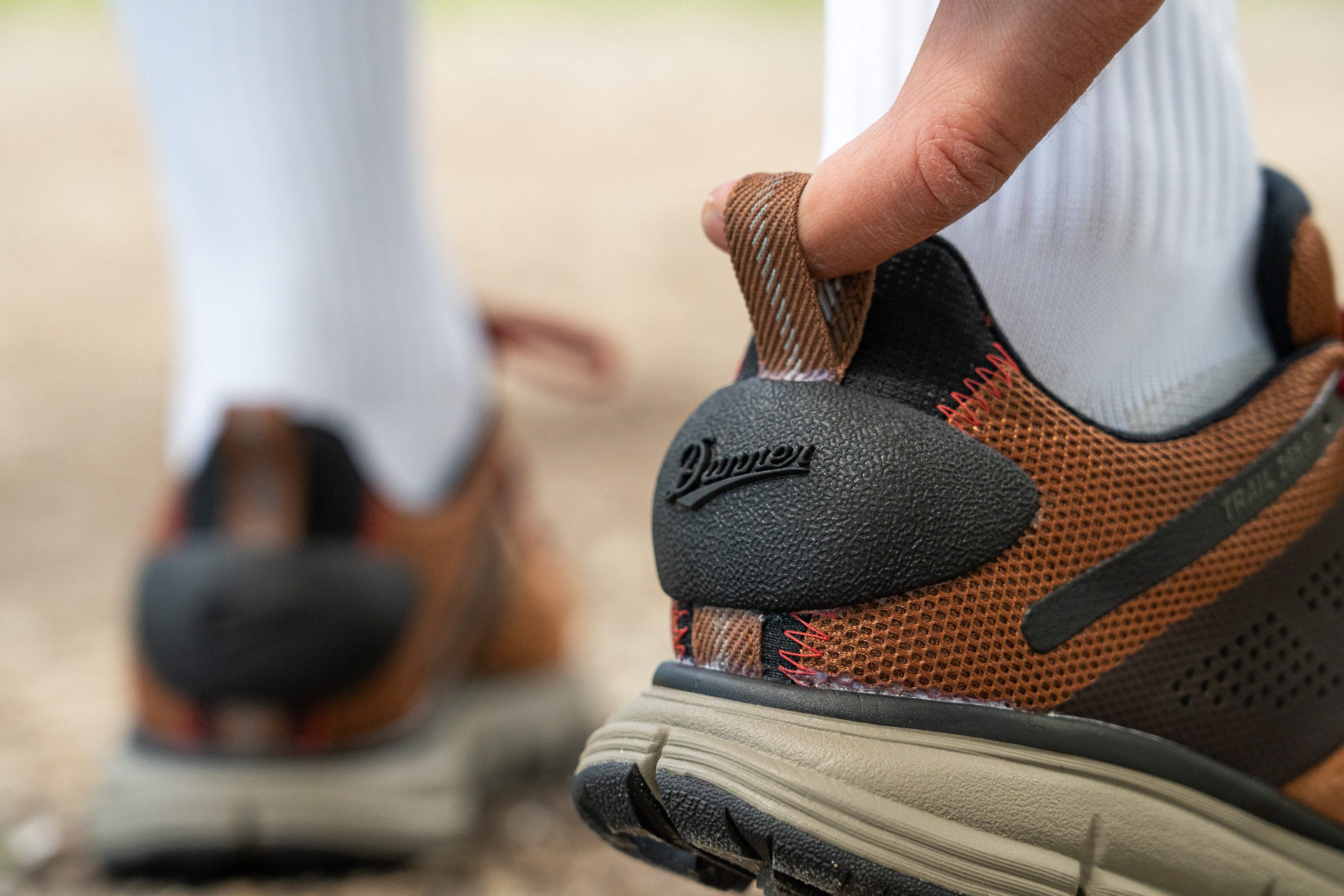
| Trail 2650 | Finger loop |
Price
The Danner Trail 2650 is one of the most expensive non-waterproof hiking shoes in our catalogue.
While we can't dismiss its high-quality suede upper, protective rock plate, and overall comfort, we don't think it offers the same value as some other hiking shoes in this price range.
| Trail 2650 | $190 |